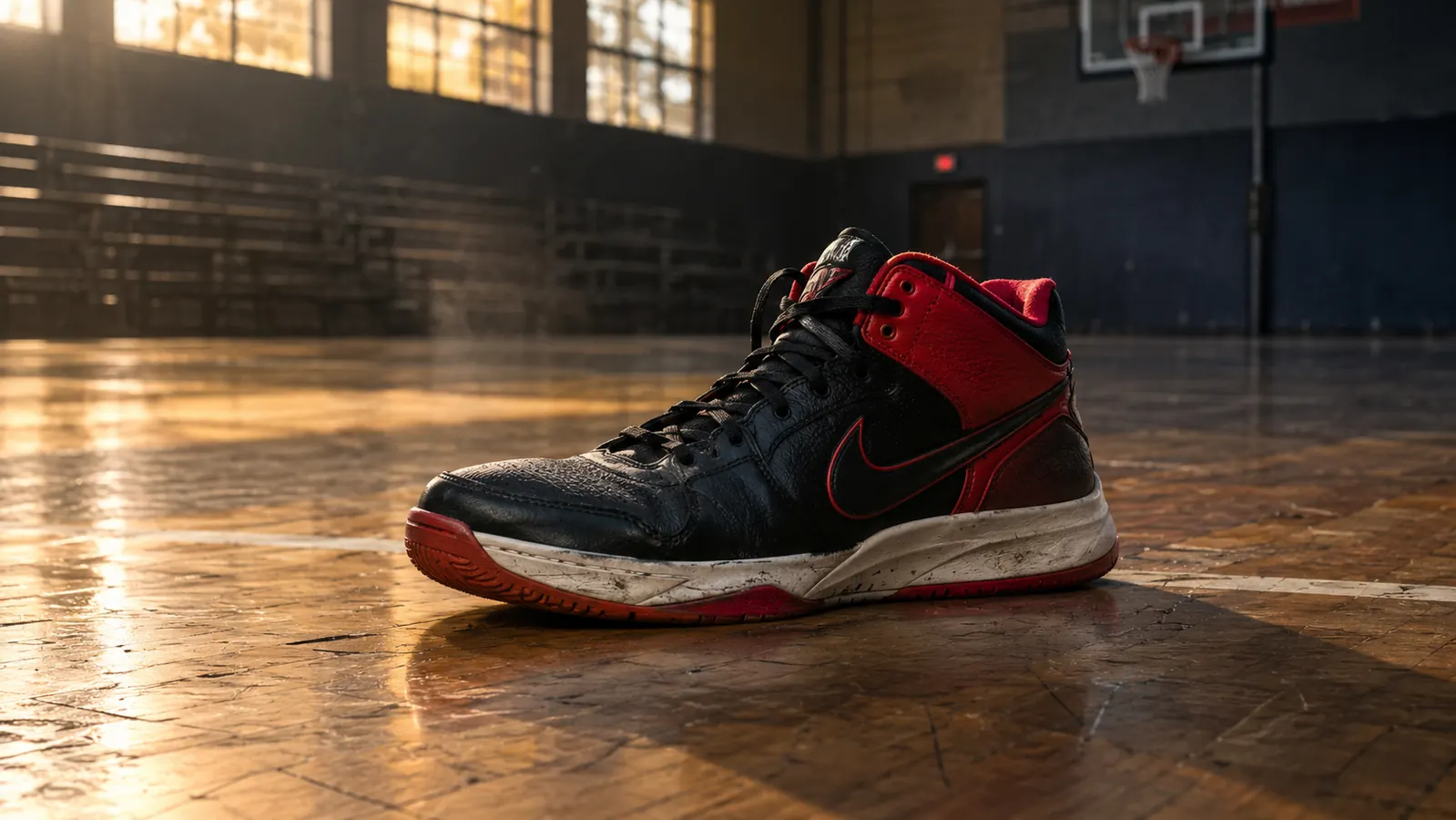
Thursday night at the rec center is the honest test. The floor has been swept maybe once since Tuesday, the same eight guys have been running full court since the nineties, and by the fourth game your legs have stopped being polite about what they think. I bought the adidas Own the Game 3.0 about twelve months ago, in November 2025, specifically for that night. Men's 11.5, a slightly wide forefoot, 6 foot 1 and about 205 pounds, playing guard and wing against guys half my age and a couple who are twice as crafty. I have worn them once a week for a full season since. Somewhere north of forty sessions on the same gym floor, and I have notes.
You have probably already tried one of the two wrong answers. Either you bought a running-style cross-trainer because it felt soft on the shelf and your forefoot slid around in it by the second half. Or you went the other direction and paid real money for a signature shoe that photographs beautifully and does nothing for you on a Tuesday. The Own the Game 3.0 sits between those two, and for a rec player going once or twice a week, the middle is usually where the value lives. adidas built it as a mid top with a mesh upper, LIGHTMOTION cushioning, a rubberized heel construction, and an Adiwear outsole. Here is what that actually means after a year.
The Quick Verdict
Grips a dusty floor, holds my heel on hard cuts, and needed no break-in at all. The forefoot cushioning fades late in a long night, and it is not the shoe for a heavy post player.
Amazon Check Today's Price →The Thursday night shoe that stopped surprising me
A full season of pickup on the same dusty hardwood and it still does the job without me thinking about it. Check today's price and current sizes on Amazon.
Amazon Check Today's Price on Amazon →How I've Used It
My week is fixed and it has been for a while. Tuesday is the Under Armour Lockdown 7. Thursday is this shoe. Sunday morning men's league is the FitVille wide pair, because that is two games back to back and my forefoot wants room. The LeBron Witness 8 sits by the door as the spare and handles the summer park court. So the adidas Own the Game 3.0 has had exactly one job: Thursday pickup at the rec center, indoor hardwood, usually dusty, usually four or five games, usually against people who know my game better than I do.
I also wear a McDavid lace-up brace on my left ankle every single time I play. I rolled that ankle badly about ten years ago and it changed how I buy shoes forever. Which means this pair had to do something specific. It had to hold a braced ankle without pinching, and it had to keep my heel locked without me thinking about it. A mid top with a lace-up closure and a rubberized heel gives you a reasonable starting point. Whether it works is a different question, and it took me a few weeks to answer it honestly.
My checklist is short and it has not changed in thirty years. Traction on a floor nobody swept. Heel hold on a hard cut. Cushioning that survives the fourth game and not just the first. And then the thing that never makes a spec sheet, which is whether I forget about the shoe by tip-off. If I am thinking about my feet at any point after the first ten minutes, the shoe has already lost me. Here is how each of those held up over a season.
Traction on a Floor Nobody Swept
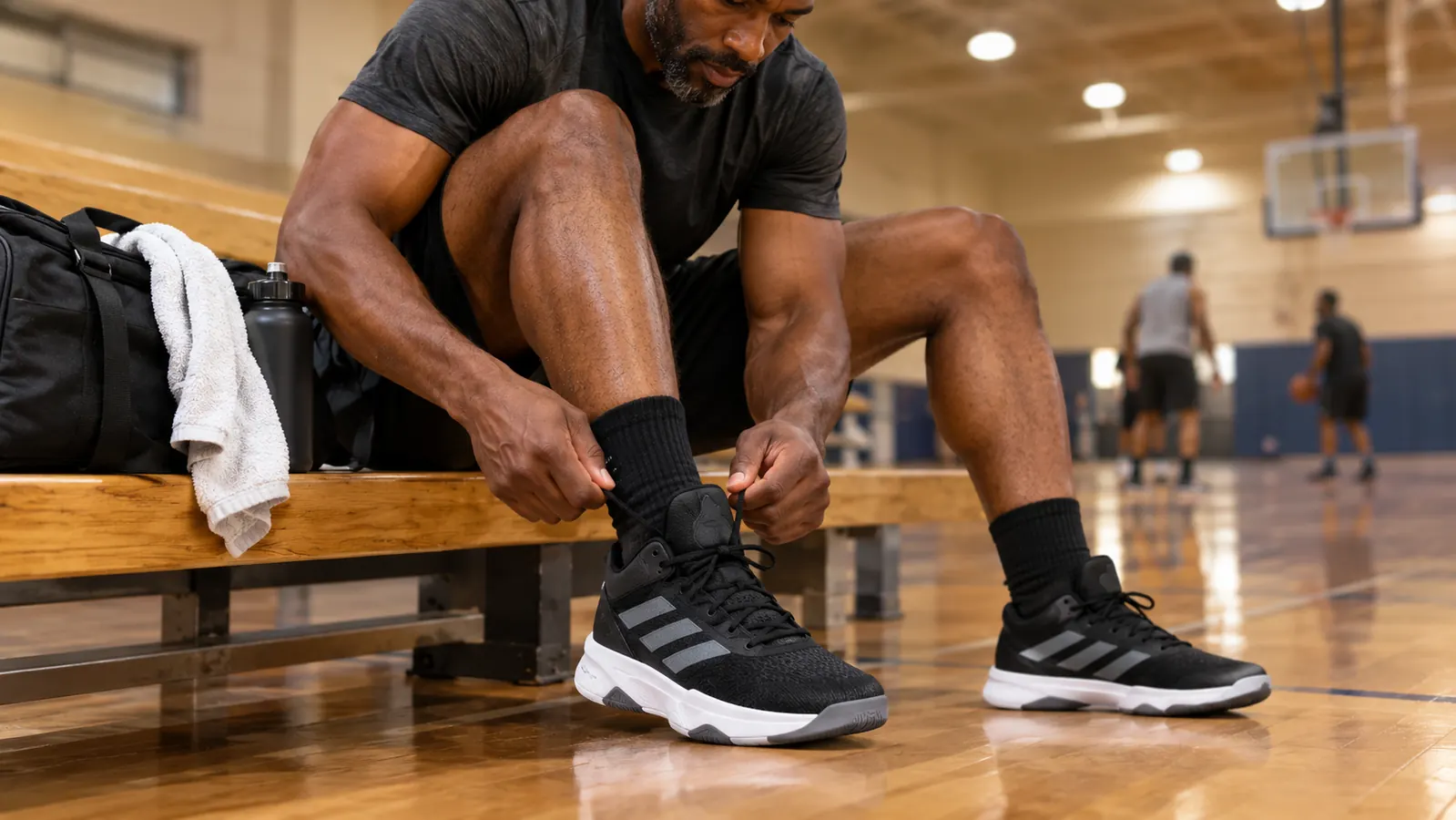
The rec center floor is the real exam. Indoor hardwood, and the custodial staff has bigger problems than my crossover. On a clean floor, most basketball outsoles grip. On a dusty one, you find out what you actually bought. The Adiwear outsole on the Own the Game 3.0 has been consistent from week one. Not telepathic, not sticky the way a brand-new pair of something pricier is, but consistent. I can plant and turn without that half second of floating where you feel the shoe decide not to participate in your plans.
The honest caveat is film. Any outsole picks up dust on a floor like that, and this one is no exception. I wipe the bottoms with my hand between games, same as I have since high school, and that handles it. What I noticed more is that the rubber has not glazed over after a year. Some outsoles go shiny and hard after a few months and stop biting anything. This one still has texture to it. For indoor hardwood at a rec center, that is the whole job, and it is still doing it.
The place I would pump the brakes is outdoor asphalt. The listing describes the outsole as built for high-wear durability, and the rubber does feel substantial, but asphalt eats every shoe eventually. I play outdoors occasionally in the summer at the park near my house, and I use the LeBron Witness 8 for that. If outdoor ball is most of your basketball, this is not the pair I would designate for it. Indoors, on hardwood, it has been steady through a full season.
The Mesh Upper and the LIGHTMOTION Ride
The upper is mesh, and in a gym that runs warm in January because the thermostat is set for the wrestling team, that matters. My feet run hot. In a heavy leather or stiff synthetic upper I am aware of my feet by the third game. In this one I am not. The mesh also keeps the weight down. The listed item weight is 1.5 pounds, which is not a number that will impress anybody at a shoe release, but it is the reason the shoe does not feel like a chore when the game gets fast and you are running the wing.
The cushioning is adidas LIGHTMOTION, and the honest description is that it feels soft when you slide the shoe on and firmer when you land on it. That is a good combination for a guard. It gives a comfortable step-in without the sinking feeling that makes a shoe feel slow on a cut. What it does not do is stay at the same level all night. By the fourth or fifth game I can feel more of the floor through the forefoot. Not painful, not a warning sign, just a reminder of where this shoe sits in the adidas lineup.
For my weight and my position that tradeoff is fine. I am 205 pounds and I live on the perimeter. If I were 250 pounds and landing on my heels in the post every possession, I would want more mass under the heel. The rubberized heel construction adds support and it has held its shape for a year, but support and deep cushioning are two different jobs. This shoe does the first one well and the second one adequately, and I would rather say that plainly than pretend otherwise.
Fit for a Slightly Wide Forefoot
I have a slightly wide forefoot, and standard-width shoes pinch me across the ball of the foot late in a long session. That is why the FitVille wide pair exists in my rotation at all. The Own the Game 3.0 in a size 11.5 fits me without that pinch, and I think the mesh is most of the reason. A mesh upper gives a little where a stiff upper would press into you. It is not a wide shoe. It is a regular shoe that tolerates a slightly wide foot, which is a different and more useful thing to know.
True to size is my read. If you are between sizes and your foot runs wide, I would go up rather than down, because the toe is closed and there is not much give at the very front. If your foot is genuinely wide, not just slightly wide, go find a wide-specific shoe and do not try to make this one work. I learned that lesson the hard way years ago and I do not recommend repeating it.
Break-in was basically nothing. First session, no blisters, no hot spots, no tape. The lace-up closure lets me snug the midfoot without cranking the top so tight that the ankle brace gets uncomfortable underneath. That combination, brace plus laces plus a mid top, is a fiddly thing to get right, and this shoe mostly got out of the way and let me do it. If you wear a brace, you know how rare that is.
What a Season of Wear Looks Like
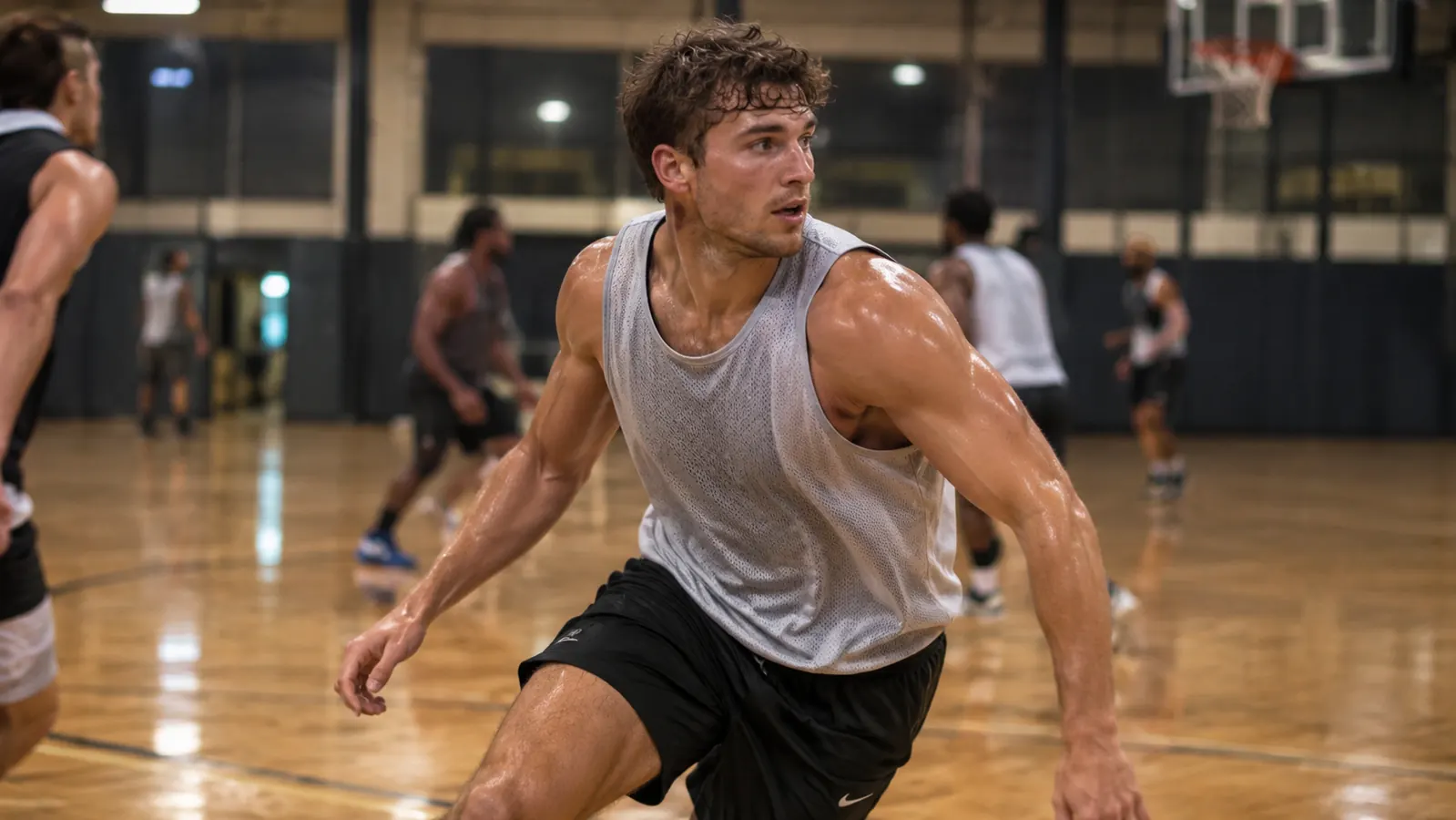
A year of once-a-week indoor play is not a torture test, but it does tell you something. The upper has not stretched out. The mesh has not torn at the flex point where my foot bends, which is usually the first place a cheap upper goes. The laces are original and not frayed. The rubberized heel still holds my heel where I put it. Nothing has separated, nothing squeaks, nothing has needed glue or a repair.
The insole is the one thing that shows the season. It has compressed under the ball of my foot and it has taken the shape of my foot, which is normal for a stock insole and true of every shoe I have ever owned. If you like a plusher ride under the forefoot, swapping in a decent insole is a reasonable move and probably extends the useful life. I have not bothered, because the shoe still does what I need it to do on Thursday.
The other thing a season tells you is whether you keep reaching for the shoe. There were nights in February when my legs were dead and I thought about grabbing the spare instead, and I still grabbed this pair. That is not a number on a spec sheet. It is the most honest thing I can tell you about any shoe I own.
What I Liked
- Adiwear outsole still bites on a dusty indoor floor after a full season
- Mesh upper breathes well and gives a little across a slightly wide forefoot
- Rubberized heel holds the heel on hard cuts, even with a lace-up brace underneath
- LIGHTMOTION cushioning gives a soft step-in without feeling mushy on a cut
- No break-in period. First session, no hot spots, no tape
- Listed at 1.5 pounds, light enough to stop noticing by tip-off
Where It Falls Short
- Forefoot cushioning fades by the fourth or fifth game of a long night
- Not the right shoe for a heavier post player landing hard on the heel
- Stock insole compresses noticeably over a season
- Not water resistant, so a dewy outdoor court is not its friend
- Will not fit a genuinely wide foot, only a slightly wide one
Forty-odd sessions on the same dusty hardwood and the outsole still has texture. That is the whole review. Everything else is details.
Who This Is For
This shoe is for the adult rec player who gets on a court once or twice a week, plays on indoor hardwood, and wants a pair that grips, holds the heel, and does not require a two-week break-in or a decision every time they lace up. It suits guards and wings, anybody in the 180 to 220 pound range who plays on the perimeter and wants a light shoe with a stable base. It also suits the player who wears an ankle brace and is tired of fighting the shoe to make room for it. And it suits a hoops parent buying for a teenager who plays a few times a week, provided the kid's foot is not genuinely wide.
If you are the guy who shows up Thursday, runs four games, drives home with your knees complaining, and wants one less thing to think about, this is a sensible answer. It is not a status shoe and it does not pretend to be. It is a shoe that does the boring parts well, and at the rec level the boring parts are the whole game.
Who Should Skip It
Skip it if you play outdoor asphalt as your main surface. The outsole is durable, but asphalt will grind through it faster than a hardwood floor ever will, and there are better choices for that job, including the pair I keep as my own outdoor shoe. Skip it if you are a bigger player who lands hard on the heel and wants deep, lasting cushioning under the back of the foot. Skip it if your foot is genuinely wide rather than slightly wide, because you will spend every session aware of your toes.
And skip it if you want the ride to feel the same in game five as it did in the first two minutes. LIGHTMOTION is comfortable and light, and it does compress under a long night. That is a fair tradeoff for the weight and the quick feel, but it is a tradeoff, and you should know it going in rather than finding out in the fourth quarter.
One season in, and Thursday still belongs to this pair
Mesh upper, LIGHTMOTION cushioning, rubberized heel, Adiwear outsole. Nothing fancy, everything it needs to be for rec center pickup. Check today's price and available sizes on Amazon.
Amazon Check Today's Price on Amazon →