By the fourth game of a Tuesday night, my feet used to make the decision for me. Not my legs. Not my wind. My feet. I would come off the floor at the rec center in Columbus, sit on the bench, and feel that hot, tight, pinched feeling across the top of my forefoot that tells you the shoe has quit cooperating. I am 47, six foot one, about 205 pounds, and I still play guard and wing twice a week plus a Sunday morning men's league. Long pickup nights are the whole reason I show up. So I stopped treating comfort as luck and started treating it as something you set up before the first tip. The shoe I have worn for those Tuesday nights for the last ten months is the Under Armour Lockdown 7, and almost everything I know about lasting three hours on a hardwood floor came from learning to use that one pair properly.
Here is what nobody tells you about long pickup nights. The shoe matters, but the way you wear it matters just as much. I have watched guys buy a new pair every season and still limp to the water fountain in the third game, and I have watched a 60-year-old regular in a plain pair of shoes play until the lights click off. The difference is rarely the shoe. It is fit, lacing, socks, heat, and what you do in the twenty minutes between games. What follows is the routine I actually run on Tuesday nights, in order, with the Under Armour Lockdown 7 as the reference point.
Ten months of Tuesday nights, one pair of Under Armour Lockdown 7
Lace-up closure, breathable upper, foam insole, rubber outsole. A simple shoe, and it has held up through about forty pickup nights without a complaint.
Amazon Check Today's Price on Amazon →Step 1: Nail the Fit Before You Ever Step on the Floor
I wear a men's 11.5 with a slightly wide forefoot, and if you have that same problem you already know the failure mode. The shoe feels fine at the store and then, three games in, the top of your foot is throbbing and you are unlacing on the bench between points. The fix starts before you buy anything. Try shoes on late in the day, not first thing in the morning, because your feet are at their largest then. Wear the socks you actually play in. Stand up, walk to the end of the aisle, and push your toes against the floor. You want a thumb's width of room past your longest toe, because toes slide forward on every hard stop and you cannot get that room back later.
The Under Armour Lockdown 7 has a lace-up closure and a round toe, and on my slightly wide forefoot it fits true to my usual 11.5. The upper is breathable and the outer material is polyester, so there is a little give across the top of the foot instead of a hard wall. That give is what makes the difference on a long night. I am not fighting the shoe for three hours. If your forefoot is wider than mine, go up a half size rather than hoping it breaks in, because a modern basketball shoe does not stretch the way an old leather boot does. You will spend all season waiting for a change that never comes.
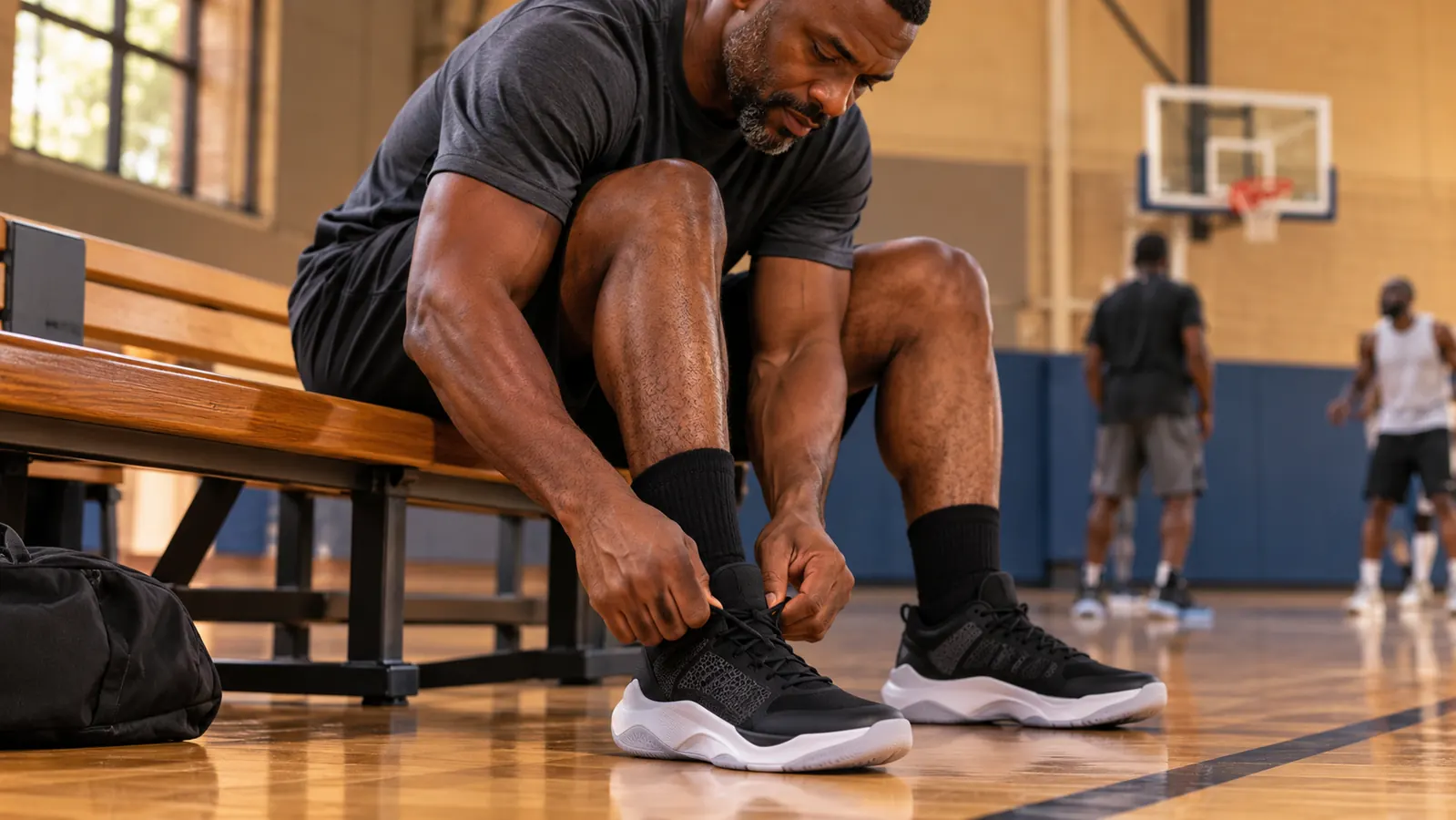
The other half of fit is the heel. Lace the top two eyelets snug, then take three hard steps and one hard cut in the aisle. If your heel lifts, you have a problem that no amount of tightening the middle laces will solve, and you will feel it every single time you push off. I set my laces once, at the start of the night, and then I do not touch them again until the first break. That one habit cut more of my foot pain than any piece of gear I have bought.
Step 2: Plan for Your Feet to Swell by Game Three
Your feet swell. This is not a theory, it is something you can measure. After two hours of running on hardwood in a warm gym, my feet are noticeably bigger than they were when I walked in, and the shoe that felt perfect at 6:45 feels like a clamp by 8:30. The Lockdown 7 has moderate cushioning and a foam insole, which helps with the pounding, but nothing helps if the laces are cranked down like you are strapping a load to a truck bed.
The system that works for me is simple. I lace the bottom of the shoe normally and leave the top two eyelets a little looser than feels natural when I first put the shoe on. Around the halfway point of the night, I sit down, pull the shoe off, and re-lace it from scratch. Two minutes of work, and the shoe goes back on with the tension I want for game four instead of the tension I wanted for game one. I have done this on Tuesday nights for ten months now and it is the single biggest comfort change I have made. Bigger than the shoe itself.
One warning. Do not solve swelling by going up a full size. You will trade a tight forefoot for a heel that slides, and a sliding heel on a dusty floor is how people end up on the ground holding a knee. Half a size, at most, and only if the toe box is genuinely short on you.
Ten months, roughly forty Tuesday nights, one pair of Under Armour Lockdown 7, and the only things I changed were how I laced it and when I changed my socks.
Step 3: Deal With Heat Before It Turns Into Slipping
Heat is the enemy of comfort, and it is also the enemy of grip. My rec center gym runs warm, the floor is often dusty, and that combination turns a shoe into a slip hazard by the second hour. The Lockdown 7 is listed as breathable, with all weather grip on a rubber outsole, and in practice it runs cooler inside than the heavier shoes I have worn. On a five game night that matters more than people give it credit for.
The biggest heat source is not the shoe. It is your socks. I bring two pairs to every pickup night and I change at the midpoint of the evening. A dry pair of socks does more for how the inside of a shoe feels than any feature printed on the box. When I skip that step, I can feel my foot sliding around inside the shoe by game four, and sliding is how blisters start and how ankles turn.
Air the shoes out between games. I pull the laces loose and stand the shoes side by side on the bench, not stuffed in my bag. Ten minutes of moving air does a surprising amount of work. If the floor where you play is dusty, wipe the outsole with your hand or a towel before the next game. Rubber picks up dust, and dust is what makes a grippy shoe stop being grippy halfway through the night.
Step 4: Fit Your Ankle Brace Inside the Shoe, Not Around It
I rolled my left ankle badly about ten years ago, and I have worn a lace-up ankle brace on that ankle in every game since. That brace changes how a shoe fits, and almost nobody accounts for it. If you crank the laces down on top of a brace, your foot goes numb by the second game and you spend the rest of the night distracted. The order matters more than the tension.
What I do: brace on first, tight enough that it feels like support and not like a tourniquet. Then the shoe, with the laces loose through the middle section and only snug at the top. The lace-up closure on the Under Armour Lockdown 7 actually helps here, because I can adjust three separate zones of the shoe instead of one big pull. The polyester upper has enough give that the brace does not create a hard pressure point across the top of my foot, which is the thing that used to send me to the bench.
Before you play a full night this way, wear the brace and the shoe together for a shootaround. Twenty minutes of shooting and light jogging will tell you what you need to know. Pressure on the top of your foot means loosen the middle laces. Heel moving means tighten the top. Do that once, get it set, and then stop fiddling with it every week.
Step 5: Rotate the Shoe and Recover Between Nights
You cannot wear the same shoe five nights a week and expect it to stay comfortable. I rotate. Tuesday is the Lockdown 7. Thursday is a different pair. Sunday morning league is a third pair, and I keep a fourth shoe as a spare for extra runs, for damp nights, and for summer games on the asphalt at the park near my house. Rotation gives each shoe a day to dry out, and a dry shoe is a comfortable shoe. That is most of the reason my Tuesday pair still feels the way it did in February.
The other part of this step happens after the game, and almost nobody does it. When I get home on a Tuesday, I loosen the laces all the way and let the shoes sit overnight with air moving around them. I do not leave them in the car. A car in an Ohio summer is a drying oven, and it will cook the foam in the midsole faster than a season of hard cuts. Jalen leaves his in the trunk and then wonders why his shoes feel dead by March. I have told him. He is 15.
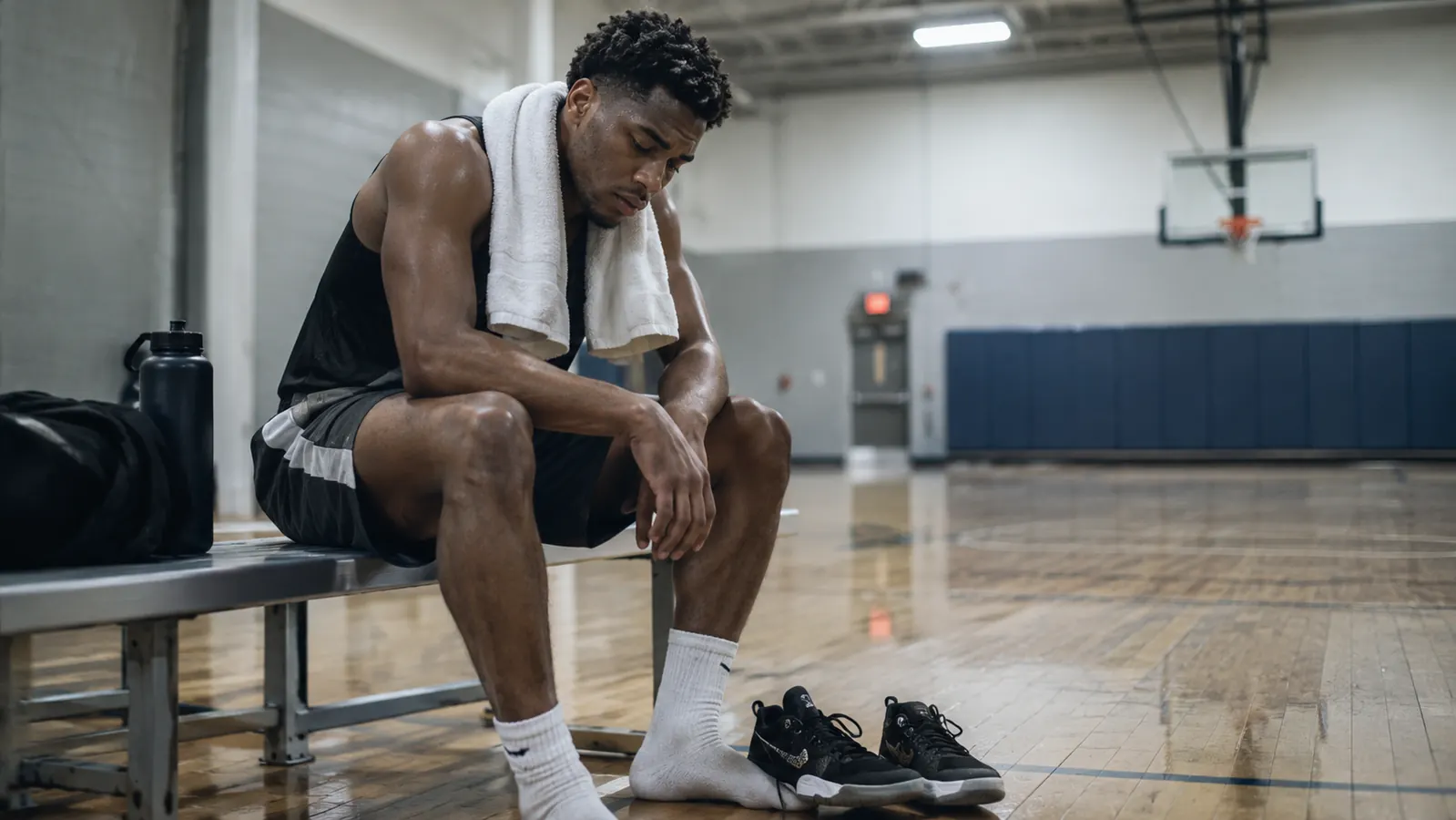
Recovery for your feet matters just as much as recovery for your legs. I sit on the bench after the last game with my shoes off and my feet up for ten minutes before I drive home. It sounds like nothing. On a night when I have played five games, that ten minutes is the difference between walking normally the next morning and shuffling through the school hallways at work all day.
What Else Helps
Socks are the piece of gear most rec players skip, and they matter more than they should. A thin cotton sock is a sponge. A cushioned synthetic sock moves moisture and gives you a little padding where your foot meets the floor. I made that switch years ago and I have never gone back, and it is the first thing I tell anybody who asks me why their feet hurt after pickup. It is not a shoe problem nine times out of ten.
A towel and a water bottle are not gear, but they are part of the routine. I wipe my feet and change socks at the same time, halfway through the night, sitting on the same bench, every Tuesday. Building that into a fixed ritual is what makes it happen. Guys who plan to do it when they remember never do it.
One last honest note about the shoe itself. The Lockdown 7 is a simple basketball shoe. It is lightweight, listed by the manufacturer at 0.27 kg, breathable, and it is not water resistant, so a wet outdoor court in November is not its job. If you play exclusively outdoors on rough asphalt, you will wear through any indoor shoe faster than you would like, this one included. Know what you bought and use it for that. Mine lives in a gym bag and goes on a hardwood floor twice a week, and after ten months it is still doing exactly what I need it to do.
The Tuesday night shoe, ten months in and still laced up for game one
If you want a lightweight, breathable basketball shoe with a foam insole and a rubber outsole that holds a dusty floor, this is the pair I keep coming back to.
Amazon Check Today's Price on Amazon →