Ten months and about forty Tuesday nights later, I can tell you what the Under Armour Lockdown 7 is and what it is not. It is not the shoe in the listing photos. It is not the shoe the angriest reviews describe either. What it is, plainly, is a lightweight lace-up basketball shoe with a rubber sole, a foam insole, and a moderate amount of cushioning. It does the boring work well. It asks you to forgive two things. And after a winter, a spring, and most of a summer of pickup at my rec center in Columbus, Ohio, I still lace it up on Tuesdays without thinking about it, which is the highest compliment a rec league shoe can get.
Here is the part that does not make it into most reviews. Shoes at this level are rarely bad. They are undifferentiated. You put them on, you play, you go home, and nothing about the experience stays with you. The Under Armour Lockdown 7 is different in one narrow way: I can name exactly where it helps me and exactly where it does not, and both lists are short. That is a useful shoe. It is not a magic one. If you are an adult playing twice a week on a floor that gets swept once a month, that distinction matters more than anything on the spec sheet.
The Quick Verdict
Thin, light, and genuinely grippy on a dusty floor, and it swallows a lace-up ankle brace. Just do not expect it to cushion a hard landing for you.
Amazon Check Today's Price →Light Enough to Forget, Grippy Enough to Trust
Breathable upper, rubber sole, moderate foam cushioning, and a lace-up fit that works over an ankle brace. Ten months of weekly pickup and it is still holding.
Amazon Check Today's Price on Amazon →What Nobody Tells You About the Lockdown 7
The listing language on this shoe is breathable, lightweight, all weather grip. Three phrases, all true, none of them exciting. What the listing never says is that those three things pull against each other. A shoe gets light by removing material, and material is what protects your foot. Under Armour handled that tradeoff by keeping the upper thin and putting the structure down in the sole, which is why the shoe feels almost flimsy in your hands and surprisingly steady on your foot. The first time I pulled it out of the box I thought somebody had shipped me a volleyball shoe. Then I wore it for two hours and stopped thinking about it.
The second thing nobody tells you is about the cushioning. The spec block calls it moderate, and moderate is the most honest word in the whole listing. It is not soft. If you are coming off a running shoe or one of the big max cushion basketball models, your first ten minutes in the Lockdown 7 will feel like walking around a gym in your socks. That feeling fades once you start cutting, because a firmer platform is exactly what keeps your foot from sliding around inside the shoe when you plant. It is a guard's ride, not a big man's ride.
One more thing worth saying plainly. The listing carries a 4.5 average across more than 5,000 ratings, which tells you most buyers are happy and a real minority are not. Read the unhappy ones and the complaints cluster around two ideas: the shoe feels thin, and the cushioning feels flat. Those are not manufacturing defects. They are the same design decision I have been describing, experienced by people who wanted something else. That is the whole review in one sentence, and the rest of this is just the details.
How I've Used It
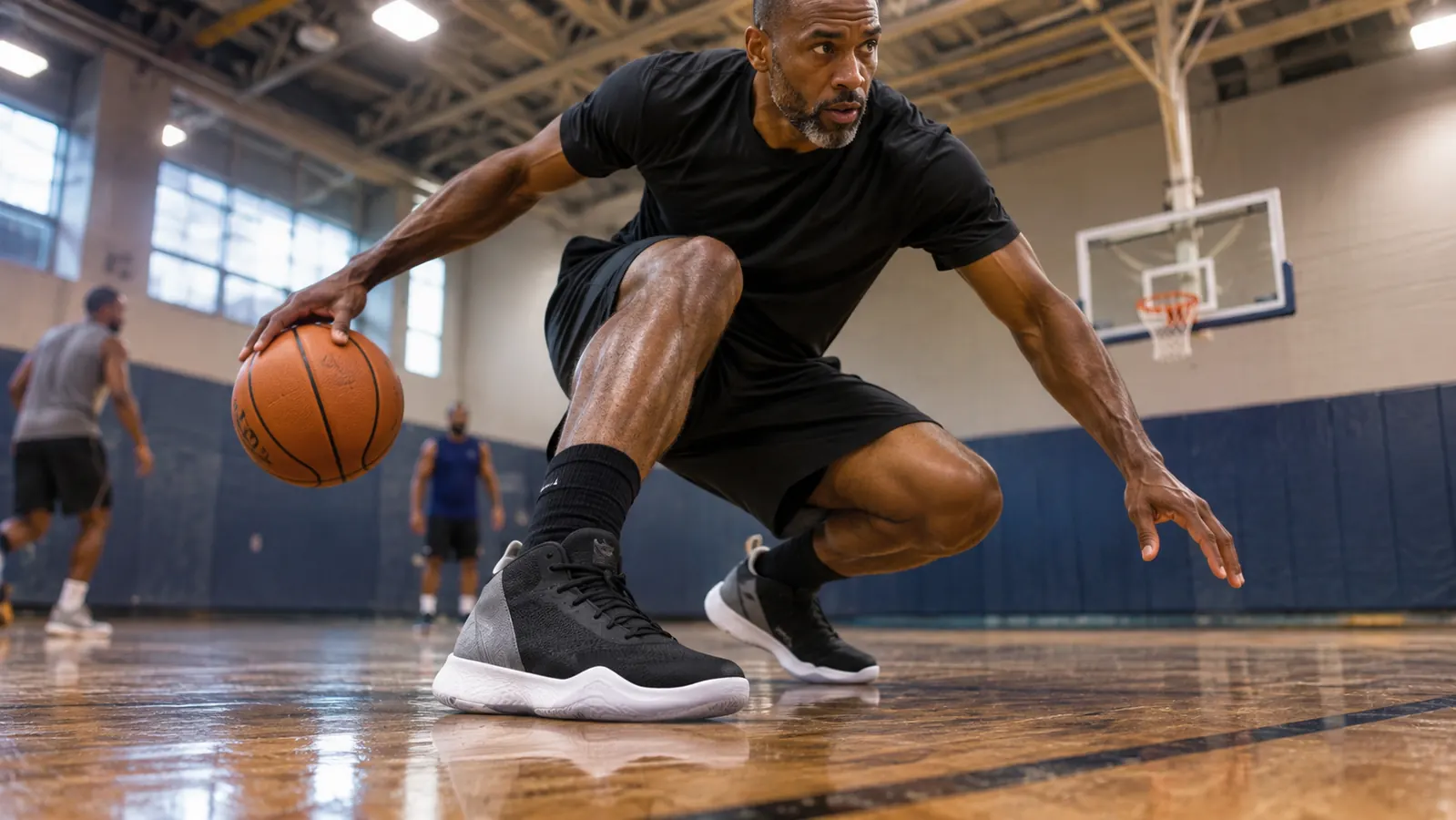
My rotation is fixed and I do not fiddle with it. Tuesday night is pickup at the neighborhood rec center, indoor hardwood, swept about as often as you would expect. That is the Lockdown 7's night. Thursday is a different pair. Sunday morning is men's league in a church gym with two games back to back, and that is a third pair entirely. I am 6 foot 1, about 205 pounds, and I play guard and wing, which means a lot of lateral movement and a lot of stopping hard from speed.
I have worn this pair once a week since January, which puts me somewhere near forty sessions. Same pair, no rotation within the rotation. That is the only way I know to find out whether a shoe is actually built or just feels good under the lights of a store. It is also why I am skeptical of reviews written after two wears. Nothing has torn. The lace loops have not frayed. The outsole is smooth in the spots you would predict, the ball of the foot and the outer edge of the forefoot, and it still grabs. One Tuesday in March I played four games in this pair, which is more than I usually get, and the last one went to fifteen by ones because nobody could make a shot. I laced them up for all four. The shoe did not change character between game one and game four, which is more than I can say for my legs. That stretch is the closest thing to a stress test I have put these through, and the report is boring in the best way: nothing happened.
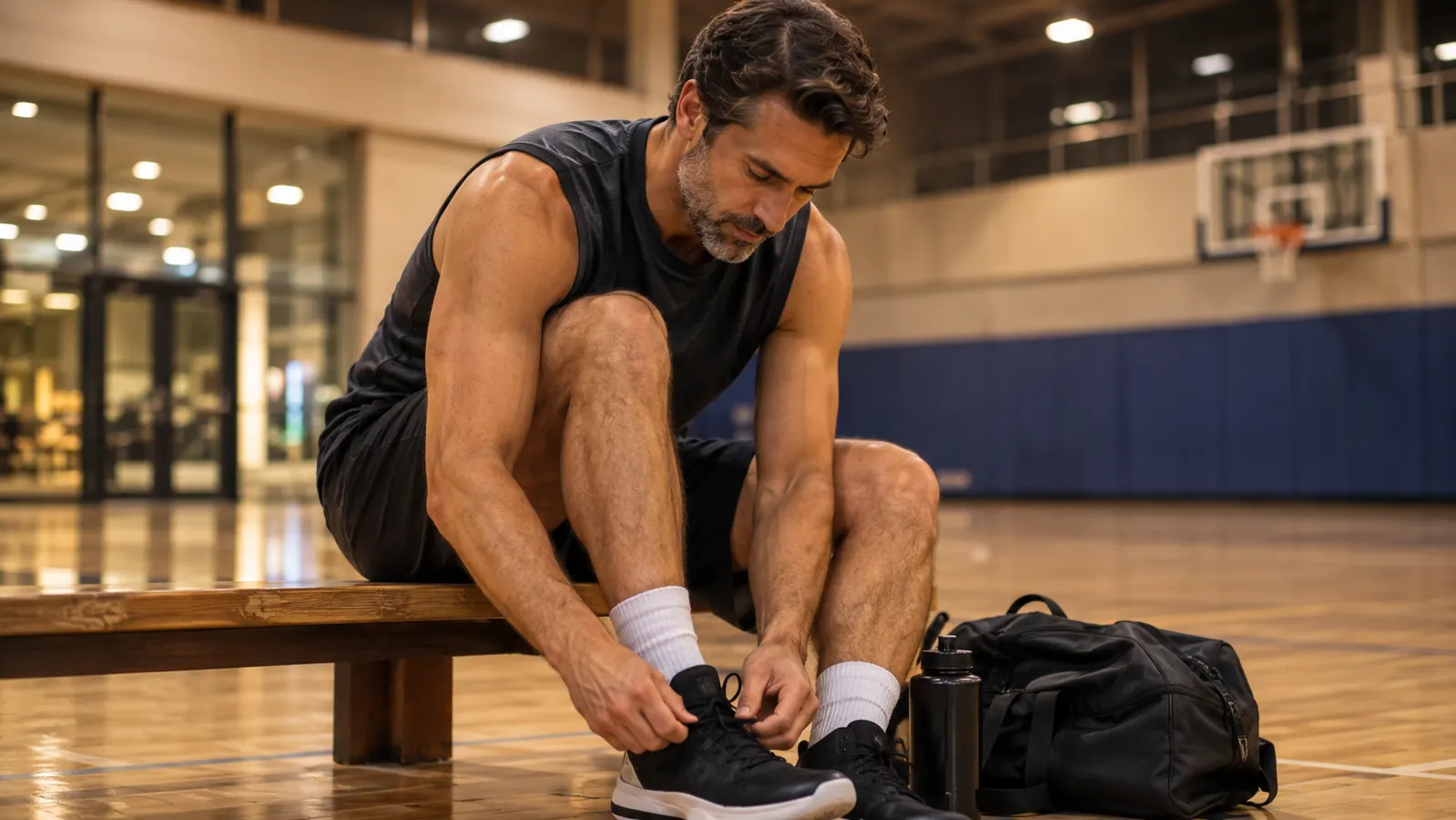
One note on how I wear it, because it drives everything else. I put a lace-up ankle brace on my left ankle every single time I play. I have since about ten years ago, when I rolled it badly enough that I still remember the sound. That brace goes inside whatever shoe I am wearing that night. Some shoes make that impossible. The Lockdown 7 does not. I will get to why in a minute, because it is the single most useful thing I can tell you about how this shoe fits.
What the Spec Sheet Actually Means on a Dusty Floor
The sole is rubber, and the listing claims all weather grip. I cannot speak to weather. I play indoors and I have only taken this pair outside a handful of times at the park court near my house in summer. What I can speak to is dust. A rec center floor on a Tuesday in February is a friction experiment nobody signed up for. That floor gets swept on Mondays if somebody remembers, and by the second game there is enough grit down that you can feel a soft shoe skate a fraction on a hard plant. Late in one February game I chased a loose ball into the corner, put my right foot down at an angle, and stopped. The shoe held. Nothing dramatic about it. It just did the thing it was supposed to do, which is the whole story with traction, because the only time you notice it is when it quits on you. I did not have one possession all winter where the shoe skated out from under me, and that includes the fourth game of the night, when everybody's legs are gone and everybody is stopping badly.
The breathable part is real too, and it matters more than I expected. My feet run hot. The upper on this shoe moves air, and after two hours my socks are damp rather than soaked. I have played in heavier leather shoes where the difference is obvious by the second game. Lightweight is listed at 0.27 kg, and I believe it, because the shoe disappears on your foot. That is exactly what you want from a guard shoe, and exactly what you do not want if you are the kind of player who needs a shoe to feel heavy to trust it.
Forty Tuesday nights on a dusty rec floor and I have not had one possession where the shoe skated out from under me.
The not water resistant line in the specs deserves one sentence of honesty. This is a gym shoe. Get caught in a Columbus downpour walking from the car and your feet are wet by the time you reach the door. That is not a flaw, it is a category. Do not buy a breathable basketball shoe and then act surprised that it is not a boot.
The Fit Story, Including the Part I Did Not Expect
I wear a men's 11.5 with a slightly wide forefoot, which is the polite way of saying most shoes pinch me across the ball of the foot somewhere in the second hour. This is a unisex lace-up with a round toe, and it fits me true to size with a little room in the width. Not sloppy room. Just enough that I am not thinking about my toes at halftime. The first night I wore them I had thick wool socks on, because it was January and the gym is cold by the door, and by the third game they were snug across the ball of my foot. I spent the fourth one thinking about my toes instead of the game. I switched back to my normal thin cotton socks the next Tuesday and the fit settled right back to where it started. That is not the shoe changing, that is me, but it is worth saying out loud: at 11.5 with a slightly wide forefoot I have one normal sock of room in there, and a thick sock eats it. If your foot is genuinely wide, try before you commit, because unisex sizing follows its own rules and my half size of slack is not a guarantee.
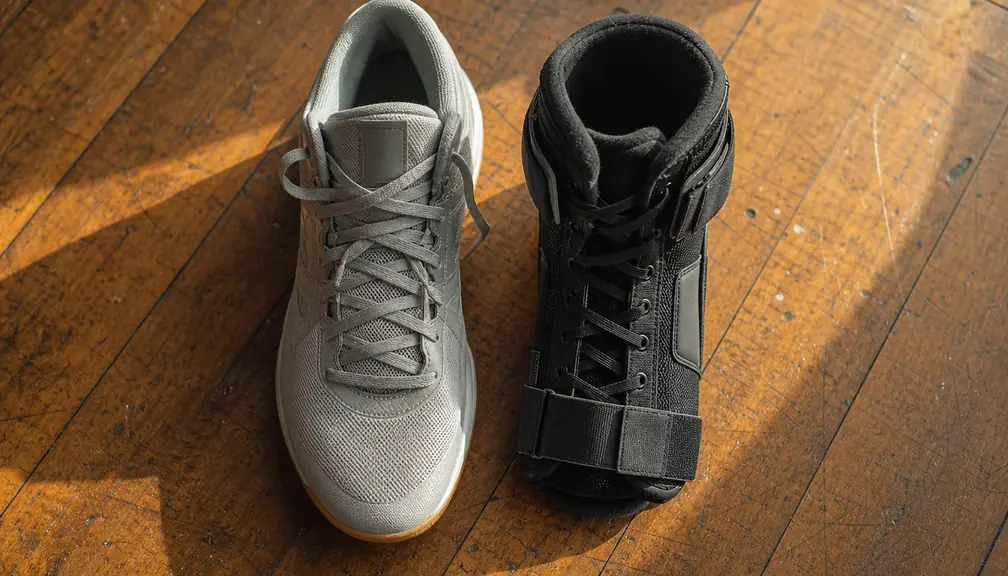
Now the part I did not see coming. With the brace on, the collar sat high enough and the lacing ran far enough forward that the brace settled down inside the shoe instead of fighting the top edge. That sounds like a small thing. It is not. In another pair I own I have to leave the top two eyelets loose to fit the brace, and then the shoe feels like it wants to slide off my heel on a cut. With the Lockdown 7 I lace normally and forget it. If you wear a brace and you are tired of choosing between ankle support and a shoe that stays on your foot, this is the shoe.
What I Liked
- Real grip on a dusty indoor floor, still holding after roughly forty sessions
- Light enough that you stop noticing you are wearing it
- Breathes well enough that two hours does not turn your socks into a sponge
- Fits over a lace-up ankle brace without loosening the top laces
- True to size with a little width to spare for a slightly wide forefoot
- Upper, laces and seams all survived ten months of weekly play
Where It Falls Short
- Cushioning is moderate at best, and it does not pretend otherwise
- Not water resistant, so summer rain at the park court ends the session
- Thin upper gives almost no protection when somebody steps on your foot
- Outsole is visibly worn at the forefoot after ten months
- A firmer ride than anyone coming from a max cushion shoe will expect
The Three Things That Bugged Me
First, the cushioning. I called it honest and I meant it, but honest is not the same as comfortable. On a night when my knees are already complaining after a long day on my feet at the school, I feel every landing in this shoe. I do not blame the shoe, since it is built the way it is built, but you should know before you buy. If you are past forty and playing on a floor with no give in it, this shoe asks your legs to handle some of the work.
Second, protection. The upper is thin, and thin uppers do not stop much. I took a foot across the top of my foot during a rebound scramble in March and felt all of it. Nothing broke and nothing swelled, but I noticed. Third, the outside. I said I only play outdoors occasionally, and that is true, but a couple of summer runs at the park scuffed the outsole faster than months of indoor play did. Rubber sole or not, this is an indoor shoe that tolerates the outdoors rather than enjoying them.
How It Held Up Over Ten Months
Ten months of weekly pickup is not a torture test, and I want to be clear about that. Somebody playing five nights a week would give you a different report. But ten months is long enough to learn whether a shoe was put together with any care, and this one was. The upper has not stretched out of shape. The collar padding has not collapsed. The foam insole has compressed a little beneath the ball of my foot, and that is the whole list. Nothing has separated. Nothing has started to smell worse than any other shoe I own, and I will not pretend that is a scientific measure.
In July I flipped both shoes over on the bench and looked at them the way you look at a used car you are thinking about keeping another year. The tread pattern is still there. The edges are rounded off. The forefoot is visibly smoother than the heel, and if I set them next to a fresh pair you would spot the difference from across the room. On the foot you would not. That is the trade a light shoe makes, and I would rather have ten months of real grip and a worn forefoot than ten months of a shoe that never felt right in the first place.
The place I would watch is the outsole. If you are a heavier player, a toe dragger, or somebody who spends real time on asphalt, expect to wear through the forefoot faster than I have. Mine is worn, not worn out. At this pace I think there is another season in it, which is a fair return for a shoe sitting at the entry end of the Under Armour basketball line.
Who This Shoe Is For
It is a guard and wing shoe for adults who play a couple of times a week on an indoor floor and would like to stop thinking about their feet. If you are quick, if you cut, if you wear an ankle brace, and if you would rather have court feel than pillow softness, the Under Armour Lockdown 7 does the job without asking anything of you. It is also a reasonable pick for a parent shopping for a teenager who will outgrow the shoe long before it wears out. I shop shoes with my fifteen year old every season for his JV team, and I know that math cold.
Who Should Skip It
Skip it if you are a bigger player who needs real cushioning beneath you, if most of your basketball happens on asphalt, or if you want a shoe that feels substantial and protective the second you slide it on. Skip it if you have a truly wide foot and cannot try a pair on first. Skip it if you are playing five nights a week, because I cannot vouch for that and I do not think the materials are built for it. There is also a Lockdown 8 out there, and I have tried a pair on in a store but never played in one, so I am not going to pretend to have an opinion that would be worth your time. What I can tell you is what ten months in this pair did and did not do for me.
If Your Foot Slides Around in Every Other Shoe, Start Here
True to size, room at the forefoot, and a collar that fits over a lace-up brace without loosening the laces. Today's price is on the listing.
Amazon See Today's Price on Amazon →