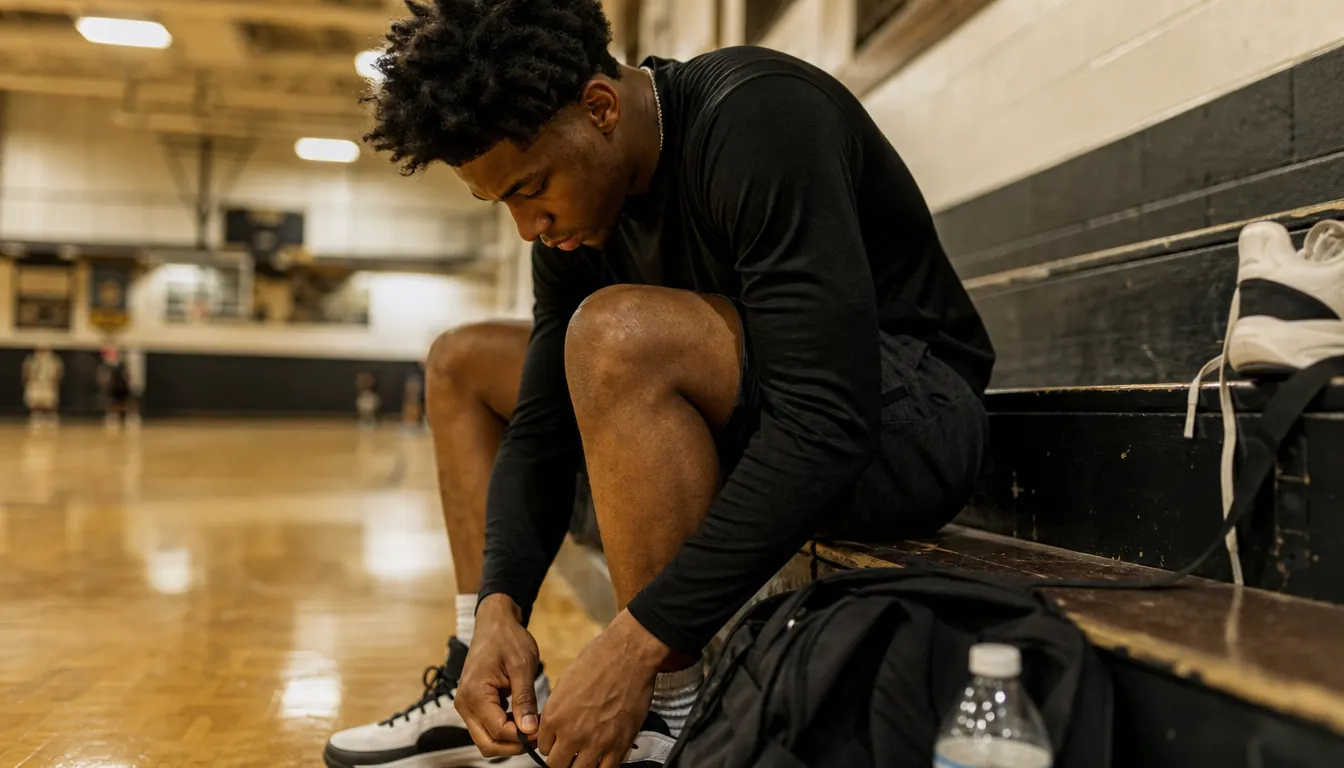
I bought the adidas Own the Game 3.0 in November 2025, roughly twelve months back, and it has been my Thursday night pickup shoe ever since. Same rec center, same dusty hardwood, same 7:30 tip. That adds up to something close to fifty runs in a single pair, which is long enough for a basketball shoe to either settle in with you or start complaining. Mine settled in. Mostly. What follows is the honest version, including the parts that still bother me and the fit issue that will decide whether these work for you at all.
Most reviews of a budget basketball shoe get written after two weeks. Two weeks tells you almost nothing. It tells you the shoe felt fine in the store and did not rub a blister on the first night, which is a first impression, not a review. What you actually want to know is whether the foam goes flat, whether the tread rounds off at the edges, whether the heel still holds your foot on the fourth hard cut of the evening, and whether the upper still looks like something you would wear in public. I can answer most of that now.
The Quick Verdict
A light, grippy, genuinely honest budget basketball shoe for average-width feet on indoor hardwood. The forefoot is narrow and the insole quits early, so try before you commit if your foot runs wide.
Amazon Check Today's Price →A year of Thursdays later, these are still the pair I reach for first
If you are a guard or a wing with a normal-width foot and a decent gym floor, the adidas Own the Game 3.0 is the most honest budget basketball shoe I have worn. Light, grippy, and still holding its shape after a full season.
Amazon Check Today's Price on Amazon →How I've Used Them
Context matters more than a star rating, so here is mine. I am 47, six foot one, about 205 pounds, and I play guard and wing. That means a lot of stopping, starting and changing direction, and not much time under the rim. Men's size 11.5, slightly wide forefoot. I play Tuesday and Thursday pickup at the rec center, Sunday mornings in a men's league at a church gym, and the occasional dry afternoon on the asphalt at a park near my house.
The Own the Game 3.0 got the Thursday slot. One night a week, a full season, indoor hardwood that goes dusty by the second game because the rec center has never had the budget for a proper mop crew. I wear a lace-up ankle brace on my left ankle inside whichever shoe I am wearing, and I have done that since I rolled that ankle badly about ten years ago. The brace changes how a shoe fits. I will get to that.
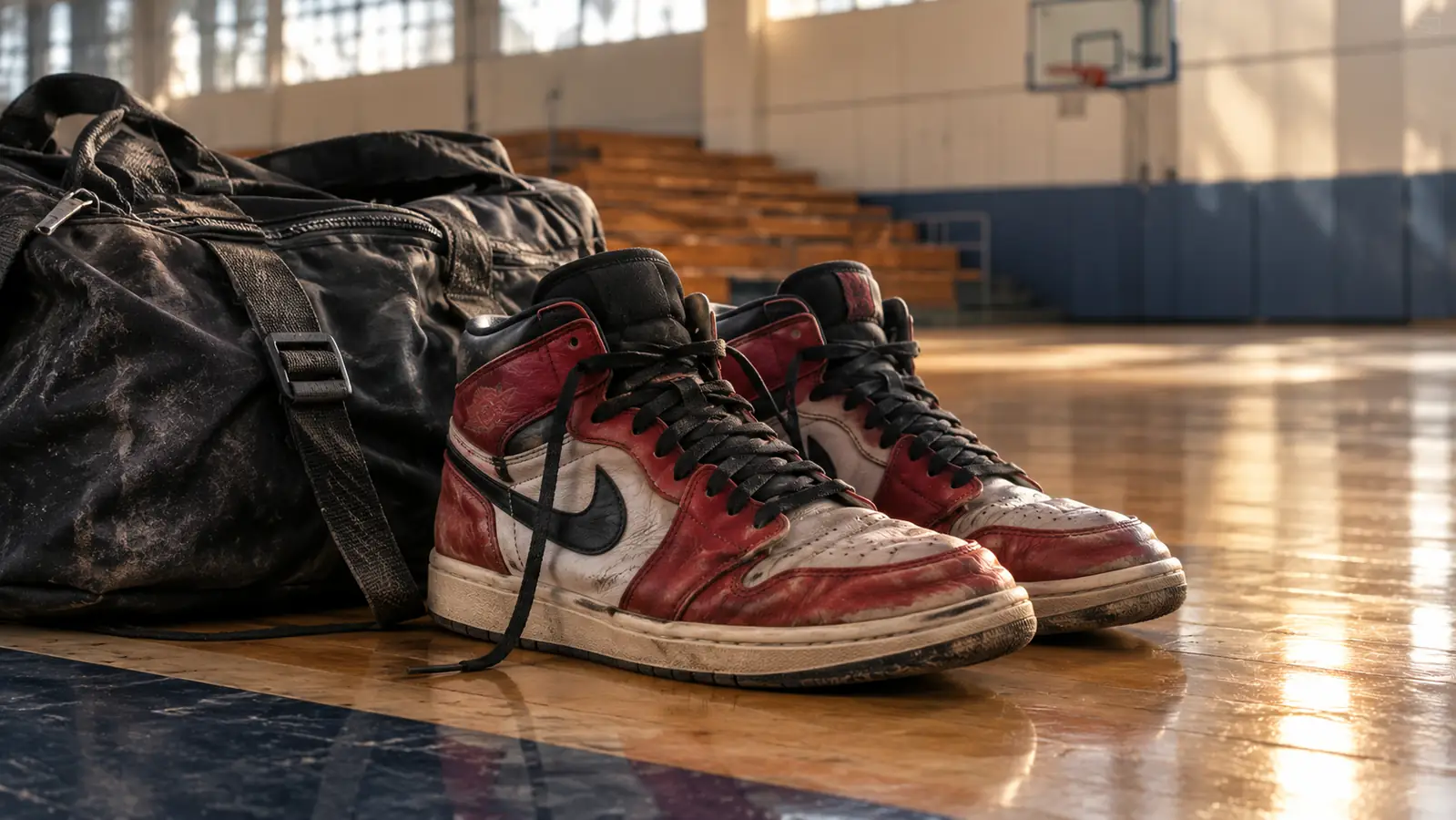
What I have not done is baby them. They have ridden in a gym bag through an Ohio winter, they have been on a floor that was damp from a leaky roof, and they have sat on a bench in a church gym that never gets above sixty degrees. Nothing has torn. Nothing has come unglued. The tread has lost some edge, and that is the most interesting part of the story, so I will get to it in detail.
What Nobody Tells You About the Fit
The most useful thing I can tell you about the adidas Own the Game 3.0 is that the fit is honest in length and unforgiving in width. On length they ran true. A size 11.5 was a size 11.5, with room at the end of the toe and no heel slip once I had the laces pulled properly. On width, the upper is mesh, and mesh does not give the way leather gives. It breaks in at the crease across the toes and that is about the whole of it.
With a slightly wide forefoot, I felt the outside edge of the shoe against my little toe for the first three or four weeks. It softened after that. It never went away entirely. If your foot is genuinely wide, not just a little puffy at the end of a long day, this is not the shoe for you, and no amount of breaking in is going to change that. Buy width, not hope.
Second thing nobody mentions is the collar. This is a mid top, cut just above the ankle bone, and it does not lock the ankle down the way a higher cut does. It gives you containment around the heel and it keeps the tongue where it belongs. If you are buying a mid top expecting it to protect an ankle that has gone over before, you are buying the wrong thing. I wear a brace. That is the protection.
Third, the lace-up closure is plain. Standard eyelets, no lacing system to speak of. That means you can get good tension across the midfoot, but you have to work for it. I double knot and I pull the bottom two rows tighter than the top. If you are the kind of player who yanks the laces and runs out the door, you will feel your foot slide forward on your first hard stop, and you will blame the shoe.
The Break-In Nobody Warns You About
Nobody tells you that a mesh upper at this level does not so much break in as stop fighting you. Week one, the shoe felt stiff across the top of the foot and the edge of the collar pressed on my ankle bone on the left. Week two, the crease formed and the pressure eased. By week three I had stopped thinking about them, which is the highest compliment a basketball shoe can get.
The one thing that did not improve is the tongue. It is thin, and on a night when I am rushing to get on the floor it folds over at the top when I pull the laces. Two seconds to fix. Annoying every single time. I have had this happen with plenty of shoes, so I am not holding it against them too hard, but you should know it is coming.
The brace is the other part of the break-in. Adding a lace-up brace through the midfoot takes up real volume inside a shoe with an upper that does not stretch. For the first month I had to leave the top two rows of laces looser than I wanted, or my toes went numb by the second game. It sorted itself out as the upper softened. It was not fun while it lasted.
Traction on a Floor Nobody Cleans
Thursday at the rec center is a real test. By 8:15 there is enough dust on the floor that you can trace the slide marks where somebody almost went down. Traction is what I care about most, more than cushioning and a lot more than how a shoe looks. The Own the Game 3.0 has been good to me there, and it has stayed good, which is the part that surprised me.
The outsole is synthetic rubber, and adidas calls the compound Adiwear and builds it for high wear. What that feels like underfoot on hardwood is a firm rubber that bites hard when the floor is clean and keeps holding longer than a soft compound when it is not. I have not had a slip that scared me in a year. I have had the normal amount of whoa on a bad patch, same as in anything else.
It also means the rubber does not shred itself on asphalt, which matters because plenty of people will wear these outdoors. The listing says they are not water resistant, and I believe it, so a wet park court in April is the wrong place for them. Dry asphalt they handle fine. I have used them at the park court near my house in summer and the edges held up better than I expected.
The Cushioning, Honestly
adidas puts LIGHTMOTION in this shoe and describes it as super light cushioning with a good step-in feel. That is accurate and also careful. LIGHTMOTION is not a max cushion setup. It is a light foam that feels soft on the first step and firms up fast when you load it. At 205 pounds I can bottom it out on a hard landing, particularly in the forefoot, and I feel the floor underneath.
For a guard who plays below the rim, that is what I want. The alternative on a budget shoe is mush, and mush is how a 47-year-old ends up with a sore Achilles on a Friday morning. For a heavier player, or anyone who plays above the rim and lands on the front of the foot, this is exactly where the shoe shows its budget roots.
What has surprised me is how the foam has aged. A year in, there is compression under the ball of my foot and less spring than there was last winter. But it has not gone dead, and it has not developed that hollow feeling where you can tell you are standing on the midsole instead of in it. Fifty runs on a budget shoe, and I expected worse.
The Heel Counter, the Brace, and Hard Cuts
adidas mentions the rubberized heel construction adding support and durability, and after a year of Thursdays I can point to where that shows up. The back of the shoe still has structure. Press your thumb into the heel counter on a worn pair and it pushes back instead of folding. That is the piece of a budget basketball shoe that usually quits first, and this one has not quit.
Here is the part nobody writes about. My left ankle gets a lace-up brace in every game, and the brace adds bulk through the midfoot and above the ankle. Inside the Own the Game 3.0 that combination is snug. On two or three nights early on I had to loosen the laces over the top of the foot to keep my toes from going numb. It works now. If you wear a bulky brace and you also have a wide foot, this shoe will feel tight in a way that has nothing to do with the size on the box.
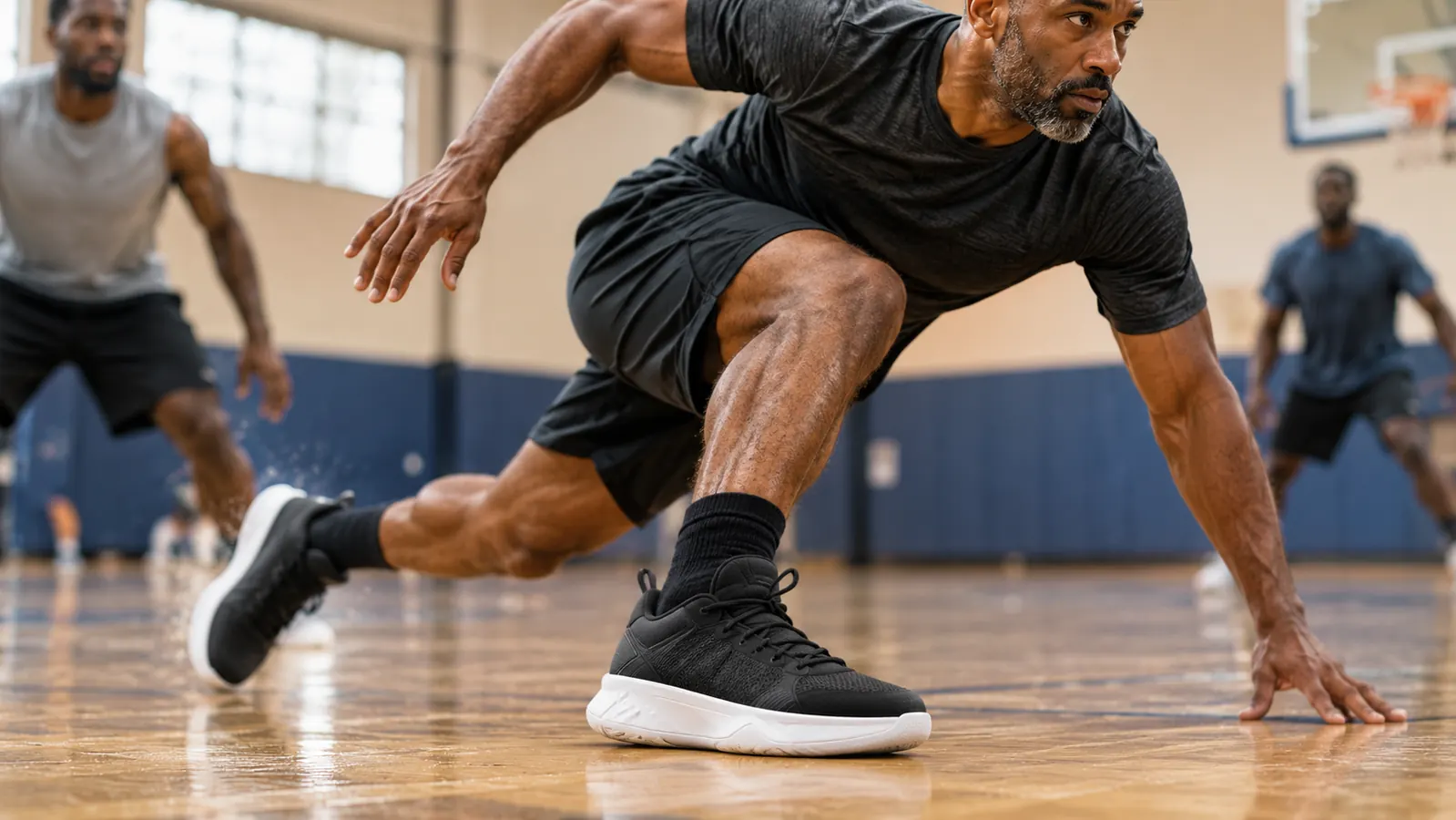
On cuts, the shoe does what a mid top with a firm heel is supposed to do. It stays with you side to side. I have never had the feeling of my foot trying to slide off the footbed during a hard change of direction, and I have felt that in cheaper shoes plenty of times. My foot goes where I put it.
What I would not do in these is play two full games of press defense on back-to-back nights. That is a fatigue question more than a shoe question, and it is the reason my Sunday league pair is a different shoe with more width and more shoe around the ankle. Know what you are buying.
What Held Up, and What Didn't
A year in, the mesh upper has kept its shape. There is a crease across the toes where everyone gets one, and the mesh at the flex point has gone soft, which is normal. No holes. No fraying at the lace line, which is where a cheap shoe usually starts to come apart. The stitching around the eyelets is intact.
The insole is the weak point, and it is the weak point on nearly every shoe in this bracket. It flattened somewhere around month five and stopped doing much of anything by month eight. It still does its job, it just feels firmer than it did new. Plan on that. It is not a defect, it is just how these are built.
The outsole has worn at the pivot area and along the outer edge of the forefoot, which is exactly where a guard wears a shoe. The tread pattern is still visible. The rubber has gone smooth on the very edge without wearing through the depth of it. I would guess there is another indoor season in them, and I would not wear them outdoors full time and expect the same.
So the honest durability picture is this. Nothing failed. One component, the insole, flattened on schedule. Everything that decides whether a shoe is safe to cut in, meaning the heel structure, the upper at the lace line, and the outsole rubber, all held up.
What I Liked
- Genuine grip on dusty indoor hardwood, still there after a full year
- Light on the foot and easy to cut in, with no break-in drama on length
- Rubberized heel construction kept its structure through a full season
- Mesh upper stayed intact at the lace line and the flex point
- Adiwear outsole rubber survives dry asphalt as well as a gym floor
Where It Falls Short
- Runs narrow through the forefoot, and the mesh does not stretch much
- LIGHTMOTION cushioning is light, and heavier players will feel the floor
- Insole flattens out inside a season
- Mid top collar gives containment, not real ankle protection
- Thin tongue folds over when you lace up fast
Fifty Thursdays in, the heel counter still pushes back when I press it. That is the piece of a budget basketball shoe that usually quits first.
Who This Is For
This is for the guard or wing who wants a light, quick shoe for pickup twice a week and does not want to spend signature money to get it. Normal to slightly narrow feet, indoor hardwood, and a player who values grip and a low ride over plush cushioning. If you are 180 pounds and you play below the rim on a clean floor, this will feel like more shoe than its budget position suggests.
It also suits the hoops parent shopping for a teenager who will outgrow a shoe long before he wears it out. I have looked at this one for Jalen, my son, who plays JV and wears a size 10, and it is the kind of shoe I would hand him without flinching, provided his foot is not wide.
Who Should Skip It
Skip it if your foot is genuinely wide. Skip it if you are a bigger player who lands hard on the front of the foot and wants real cushioning under the ball. Skip it if you need the shoe itself to support an ankle that has gone over, because a mid top collar is containment, not protection. And skip it for wet outdoor courts, since the shoe is not water resistant and the mesh will soak through in minutes.
Also skip it if you want one shoe for absolutely everything. This is a good indoor pickup shoe that happens to survive dry asphalt. It is not a do-everything shoe, and treating it like one is how you end up disappointed in month four.
Average-width feet on hardwood? These earn their spot in your bag
Twelve months, one pair, and no failure that mattered. The adidas Own the Game 3.0 is the budget basketball shoe I keep pointing guards toward when they want grip, a light ride, and a heel that still holds a hard cut.
Amazon Check Today's Price on Amazon →