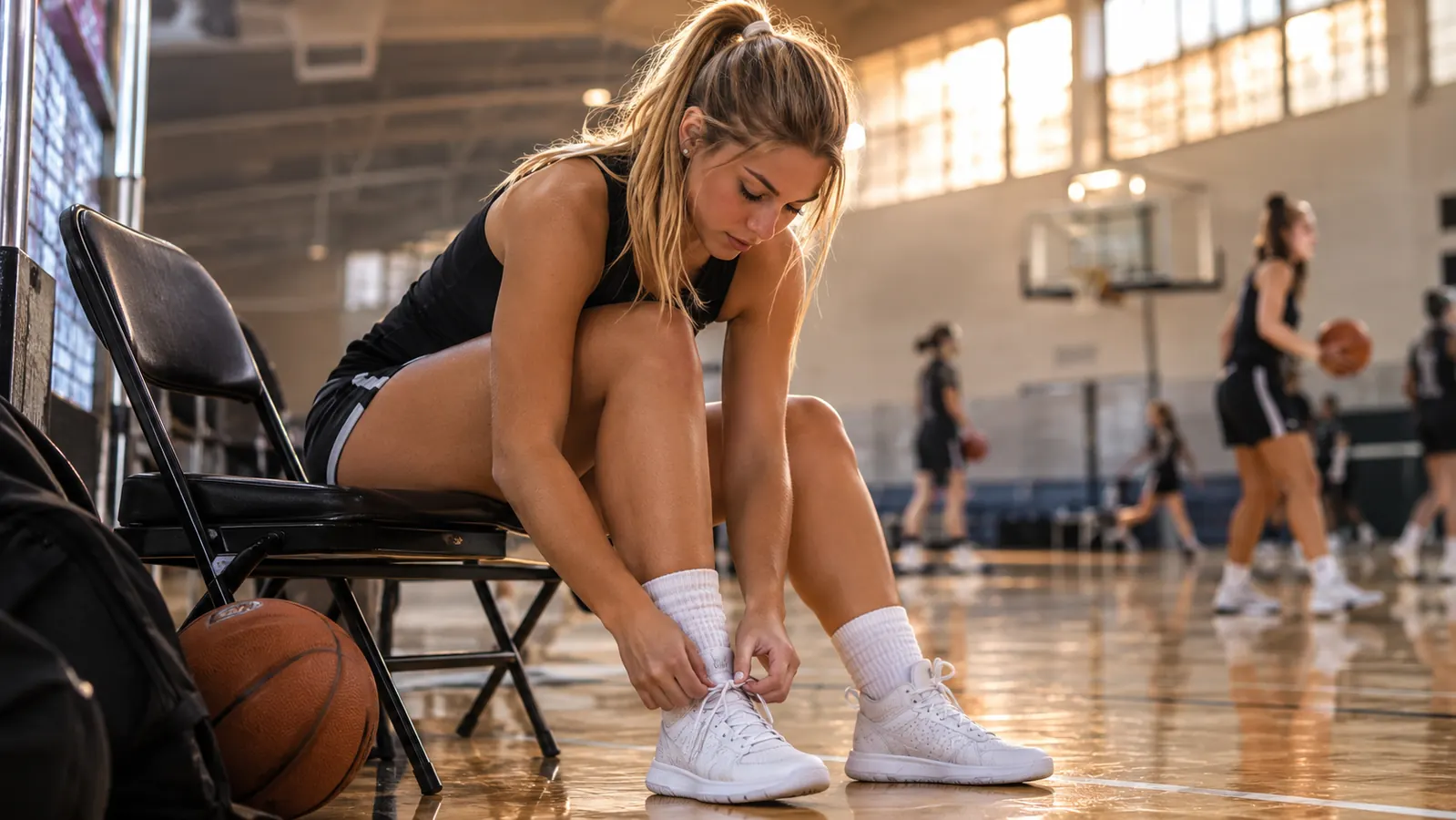
The first thing I do when I walk into a gym is look at the floor. Not at who showed up. At the floor. If it has that dull, grayish sheen across the top of the key, I know exactly how my Tuesday night is going to go, and I know which pairs in my bag are going to keep me upright. Dusty hardwood in a rec center is a different sport than clean hardwood in a high school gym, and nobody tells you that when you are standing in a store looking at a wall of shoes.
I am 47, 6 foot 1, about 205 pounds, and I play guard and wing. I rolled my left ankle badly about ten years ago and I have not stopped thinking about it since. I play pickup at my neighborhood rec center on Tuesdays and Thursdays and a Sunday morning men's league in a church gym, and I have bought five different pairs of basketball shoes in the last year and a half, all in men's 11.5, all with my own money. One of them is the Nike LeBron Witness 8, which I picked up in April and wear about once a week as my spare and my summer park shoe. It is not the best shoe I own. It is the most useful shoe I own for explaining what to look for, because it does a few things very well and a couple of things just fine, and that is what most of us are actually buying.
The pair I use as my measuring stick for everything else
The Nike LeBron Witness 8 is what I hold other indoor shoes up against: a cushioned midsole, a lace-up lockdown that holds, and enough forefoot room for a slightly wide foot. If you want a benchmark of your own, start here.
Amazon Check Today's Price on Amazon →Here is how I actually evaluate a pair now, in the order I check it. Five steps. Do them in this order and you will not come home with a shoe that matches your jersey and nothing else.
Step 1: Test traction on the floor you actually play on
Traction is the whole ballgame. Everything else is comfort. If a shoe will not grip, nothing else it does matters, because you will spend the night sliding into your own cuts and thinking about your knee instead of the game.
Manufacturers photograph shoes on clean, polished hardwood. That is not your floor. My rec center floor gets dust and grit on it by the second hour, and by the fourth game of the night it is like playing on a waxed tile. So the test is not how a shoe grips on a showroom floor. The test is how it grips after twenty minutes of everybody else's shoes have tracked dust onto it.
What I look for: a herringbone or blade pattern with actual depth to the grooves, and rubber that feels slightly soft and tacky when you drag a thumbnail across it rather than hard and glassy. Soft rubber grabs dust and needs a wipe. Hard rubber ignores dust and slides. When I first wore the Nike LeBron Witness 8 on my church gym floor, which is the cleanest surface I play on, the grip was immediate and stayed put through a full morning of two games. On the rec center floor on a Thursday, I have to wipe the outsoles with my hand a couple of times a night the same as I do with any shoe. That is normal. What matters is that it grips again after the wipe instead of staying greasy. If it stays greasy, the rubber compound is wrong for indoor use, and no amount of wiping fixes it.
Step 2: Check heel lock before you check anything else about the fit
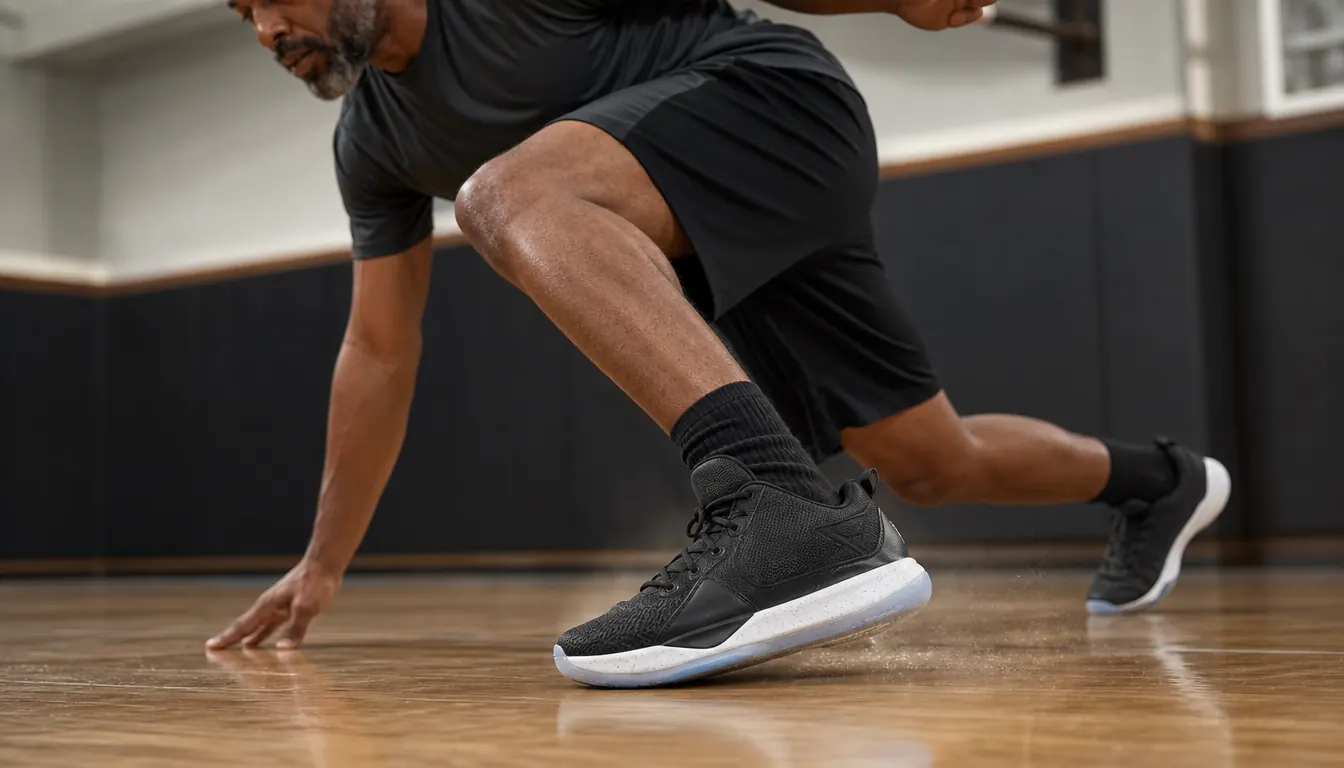
Everybody tries on a shoe by wiggling their toes. Wrong first move. Put the shoe on, lace it up snug, and then try to pull your heel out of the back of it. If your heel lifts even a quarter inch when you push off, put the shoe back in the box. A heel that slides is how you end up with a blister on your Achilles and a wobble on every cut.
This is where the Nike LeBron Witness 8 earns its place in my rotation. The upper is a synthetic leather with mesh panels, and the heel area holds my foot without feeling like it is biting me. I wear a McDavid lace-up ankle brace on my left ankle, the one I rolled about ten years ago, inside every shoe I play in. That brace takes up real volume, and a lot of shoes will not close cleanly around it. The Witness 8 laces up over the brace without the heel lifting, which is not something I can say for every pair I have tried.
When you try a pair on, lace it all the way to the top eyelet with the brace or thick socks you actually play in, not the thin dress socks you were wearing to the store. Walk on your toes, then push off hard like you are going for a layup. Listen to the shoe. If it talks, it is loose.
Step 3: Get the forefoot width right, because you cannot fix it later
I have a slightly wide forefoot. It took me years to admit that. For most of my thirties I bought shoes a half size up to get the width I needed, which gave me extra length, which gave me a heel that slid, which brought me right back to Step 2. That is the trap. Length is not width, and no insole or extra sock is going to make a narrow shoe wider.
Now I look for a shoe that fits my width at my true length. The Nike LeBron Witness 8 does that for me at 11.5. My forefoot sits on the footbed instead of hanging over the edge of it, and I do not get that hot spot under the ball of my foot late in a long run. If a shoe is too narrow at your true size, do not size up. Find a different shoe, or find a wide version of that shoe.
The test: put the shoe on and stand up. Press your thumb down along the outside edge of the shoe where your little toe sits. If your foot is bulging over the footbed and pushing the upper out past the midsole, the shoe is too narrow. Simple as that. Two minutes at the store saves you a month of foot pain.
Step 4: Understand the cushioning you are actually buying
Cushioning is where most guys get talked into spending more than they need. Yes, a heavier player benefits from more foam underfoot. No, you do not need the priciest shoe in the store to protect your knees at the rec center.
The Nike LeBron Witness 8 is a cushioned shoe. That is the listing's own word for it, and it matches what my legs tell me after a couple of hours. It absorbs landings well enough that my knees are not grumbling on Wednesday morning, and it stays reasonably stable when I plant and cut rather than feeling like I am standing on a marshmallow. For a 205 pound guard in his forties, that is the right balance. If I were 260 pounds and playing the post, I would want more shoe under me.
What you should be wary of is a shoe that feels soft and bouncy in the store and turns into a wobbly platform when you cut. Cushion that lets your foot roll inward is worse than a firm shoe. Try this: stand in the shoe and shift your weight side to side, then rock forward onto your toes. If you feel like the shoe is steering your foot, walk away. A good cushioning setup should feel like the floor is being managed for you, not like you are balancing on a ball.
Step 5: Decide what the shoe is for before you spend
This is the step almost nobody does, and it is the one that saves the most money. Not every pair in your bag needs to be a starting lineup shoe. My rotation is fixed: Tuesday night is the Under Armour Lockdown 7, Thursday night is the adidas Own the Game 3.0, Sunday morning league is the FitVille in its extra-wide width because I play two games back to back and my forefoot needs the room. The Nike LeBron Witness 8 is my spare, the shoe I grab when one of the others is still damp, and it is the one I take to the outdoor park court near my house in the summer.
That is exactly what it is built to do for me. It is a cushioned, lace-up basketball shoe with a synthetic leather and mesh upper, and it handles a full run on hardwood or asphalt without complaint. Nike sells it at a price that sits well below the top signature models, and it is rated 4.3 from more than 700 reviews on Amazon, which is roughly what you would expect from a solid mid-range shoe that does its job. I am not going to tell you it is better than a shoe that costs twice as much. I am telling you to figure out what role the shoe is filling before you decide how much it is worth.
A shoe that grips, holds your heel, and fits your width at your true length will beat an expensive shoe that does two of those three things.
Ask yourself three questions before you buy. How many nights a week will I actually play? Is this shoe for hardwood, asphalt, or both? Am I replacing a worn out pair or adding a second pair to rotate? If you play twice a week indoors on dusty hardwood, you need one good shoe and you need to keep it clean. If you play four nights a week, rotate two pairs, because foam breaks down faster from being compressed every single day than it does from age.
What Else Helps
Two things I would add to the list. First, an ankle brace if you have ever had a bad sprain. I wear the McDavid lace-up on my left ankle every single game and I have not rolled it since I started wearing it. A brace changes how a shoe fits, so bring it with you when you try shoes on, and size the shoe around the brace, not around your bare foot.
Second, keep a towel in your bag and wipe your outsoles every couple of games. It sounds like a small thing. On a dusty rec center floor it is the difference between a shoe that grips all night and a shoe that grips for one game. And be honest about surface: if you play outdoors at all, dedicate a pair to asphalt, because asphalt eats outsoles and you will not want to bring that chewed-up sole back onto hardwood.
Last thing, and I mean this: ignore the label on the box. A shoe is not good because it has a famous name on it or a number in the model. I have been playing pickup for thirty years and the best shoe I ever owned was not a signature shoe. Judge the shoe by the floor, your heel, your width, and the job you need it to do. Everything else is marketing.
Start with the pair that gets the basics right
Cushioned underfoot, lace-up lockdown that holds over an ankle brace, and enough forefoot room for a wide foot at true size. The Nike LeBron Witness 8 is the shoe I hand people when they ask me where to start.
Amazon Check Today's Price on Amazon →