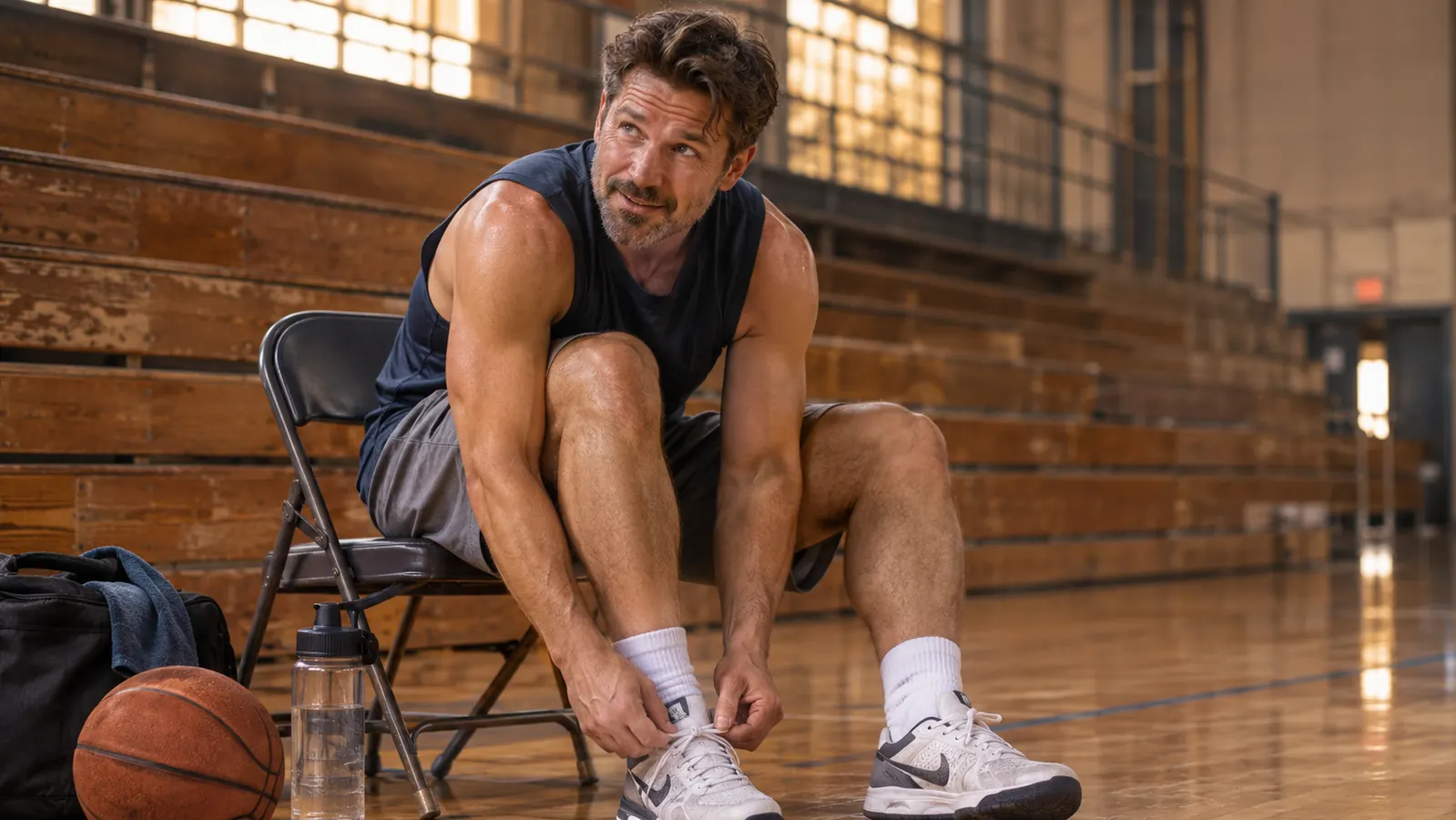
I bought the Nike LeBron Witness 8 in April, seven months ago, as a spare. Not my Tuesday shoe, not my Sunday shoe. The one I grab when another pair is still damp from the night before, or when the weather turns and I want something I do not mind taking to the outdoor park court.
That is an honest place to start, because a spare gets tested differently than a starter. It gets tested on the nights you are tired, on the nights the floor is bad, on the nights you play three games instead of two. Seven months of that is enough for me to tell you the real version: what the Nike shoe does well, where it annoyed me, and who should not buy it at all.
The Quick Verdict
A genuinely good bargain-cushion basketball shoe for a normal-to-narrow foot. If your forefoot runs wide like mine, budget for a half size up and thinner socks.
Amazon Check Today's Price →Want to see the current price and size run before you commit?
Sizing is the whole story with this one. Check what is in stock in your size on Amazon, then read the fit section below before you decide.
Amazon Check Today's Price on Amazon →What Nobody Tells You Before You Buy
Most coverage of the Witness line reads like a spec sheet read aloud. Cushioned. Lace-up. Basketball. All true, all useless.
Here is the part people leave out. The listed upper is synthetic leather with textured details plus mesh, and it does not stretch much. Tighten the laces hard on night one, the way I tighten every new shoe, and you will feel a pressure band across the top of your foot by the second game. It softens after a few weeks. Until then, it is a shoe that punishes you for lacing it like an old-school leather high-top.
The other thing nobody says: the ankle area is padded and flexible, not a rigid, cast-like support. That is comfortable. It is not the same as a shoe that wraps your ankle. I care about that more than most, having rolled my left ankle badly about ten years ago. I have worn a McDavid lace-up brace on that ankle ever since, in every game, and I had to make a deliberate adjustment to get the brace and this shoe to coexist. More on that below.
A spare gets tested on the nights you are tired, on the nights the floor is bad, on the nights you play three games instead of two.
How I've Used It
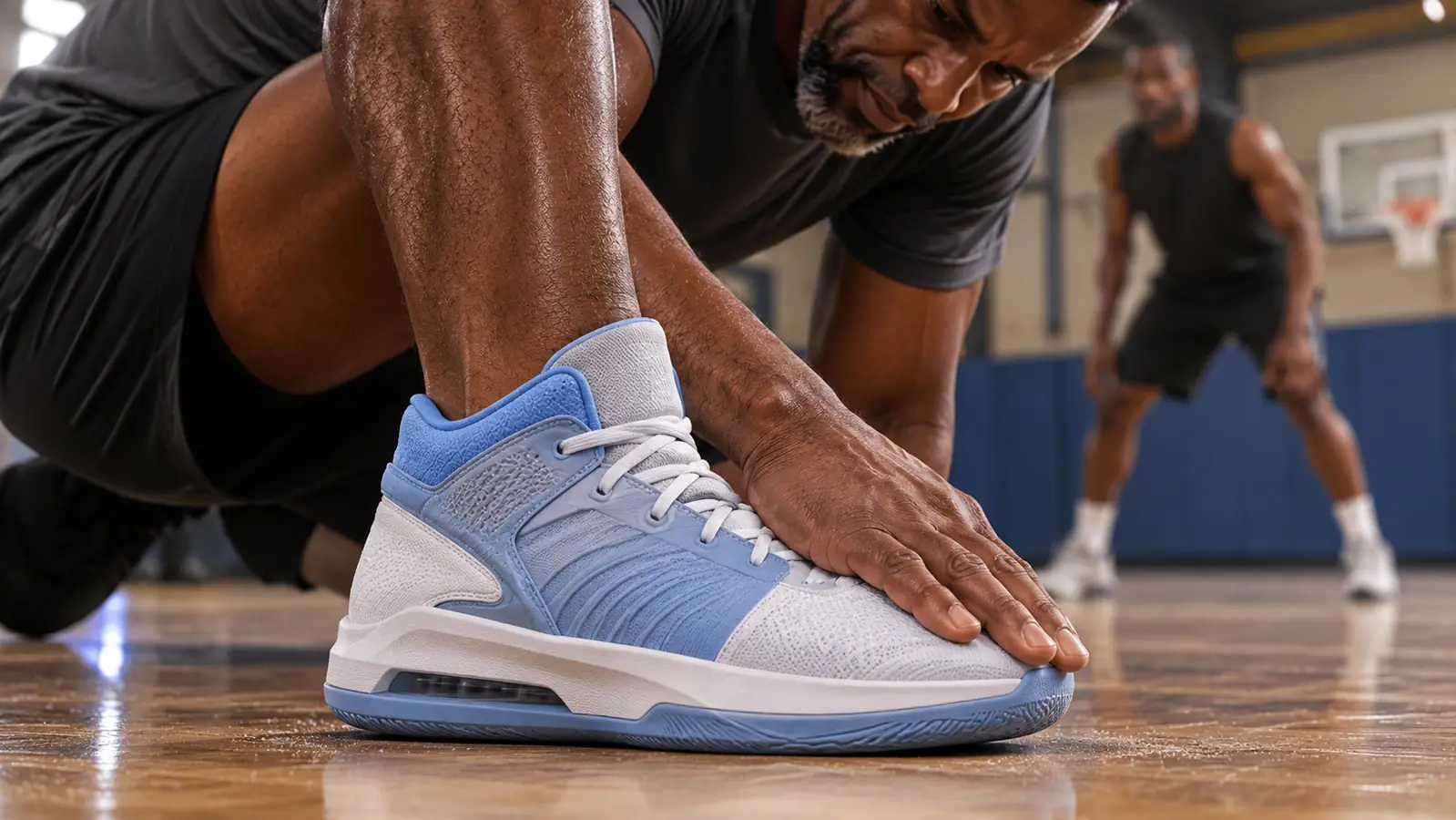
My week is fixed. Tuesday pickup at the rec center in a different pair. Thursday pickup in another. Sunday morning men's league in a wide-fit high-top I bought because standard widths pinched my forefoot late in long runs. The LeBron Witness 8 fills the gaps: extra runs, damp-shoe nights, and summer afternoons at the park court near my house.
So call it roughly once a week for seven months, indoors on dusty hardwood mostly, outdoors on asphalt maybe a dozen times since spring. I am 6 foot 1, about 205 pounds, and I play guard and wing, which means a lot of cutting and a lot of stopping. I wear a men's 11.5 with a slightly wide forefoot.
What I watched for is dull but useful. Does the heel hold when I cut hard? Is the traction still there on a floor nobody swept since noon? Do I notice the shoe at all in the fourth game, or am I thinking about my feet?
Traction on a Bad Floor
Our rec gym is dusty. I have said it before and I will say it again, because it is the thing that separates shoes for me. A clean college floor flatters every outsole ever made.
The rubber here has been dependable. Not the loudest squeak in the gym, and I have played in shoes that grab harder on a swept floor. But on a Tuesday night with dust rolling around, I got consistent bite on hard stops. A few times I had to wipe the sole with my hand after a long defensive possession, which is normal anywhere, and once I got a little slide on a wet spot near the baseline that no shoe would have saved.
One Tuesday in July made the case for me. The gym had hosted a summer camp all afternoon and nobody had swept before open run. I wiped my soles twice in the first forty minutes, which I almost never do, and still got a clean stop on a closeout late in the second game. The rubber is not magic. It just keeps biting when the floor is at its worst.
Outdoors is a different test. At the park court near my house, the asphalt is rough enough to chew through soft rubber. I played there maybe a dozen times between May and September. The rubber under the ball of my foot is worn smooth in one spot but not through. I would not call it an outdoor shoe first, but it has survived the summer.
Cushioning, Weight, and How It Feels Late
The listing calls it cushioned and lists 2.2 pounds. What matters is not the number, it is whether the sole still feels like something at the end of the night.
For me it does. It is a softer, more forgiving ride than the flat, board-like bargain shoes I played in for years. My knees do not have anything to say after three pickup games in this shoe, which is more than I could say at 40.
My Thursday shoe is firmer. I feel the floor more in that pair, and for quick defensive slides I sometimes prefer it. The Witness 8 is the softer ride. At 205 pounds, I notice the difference most in the second hour, when my knees start sending messages. With this shoe, those messages are quieter.
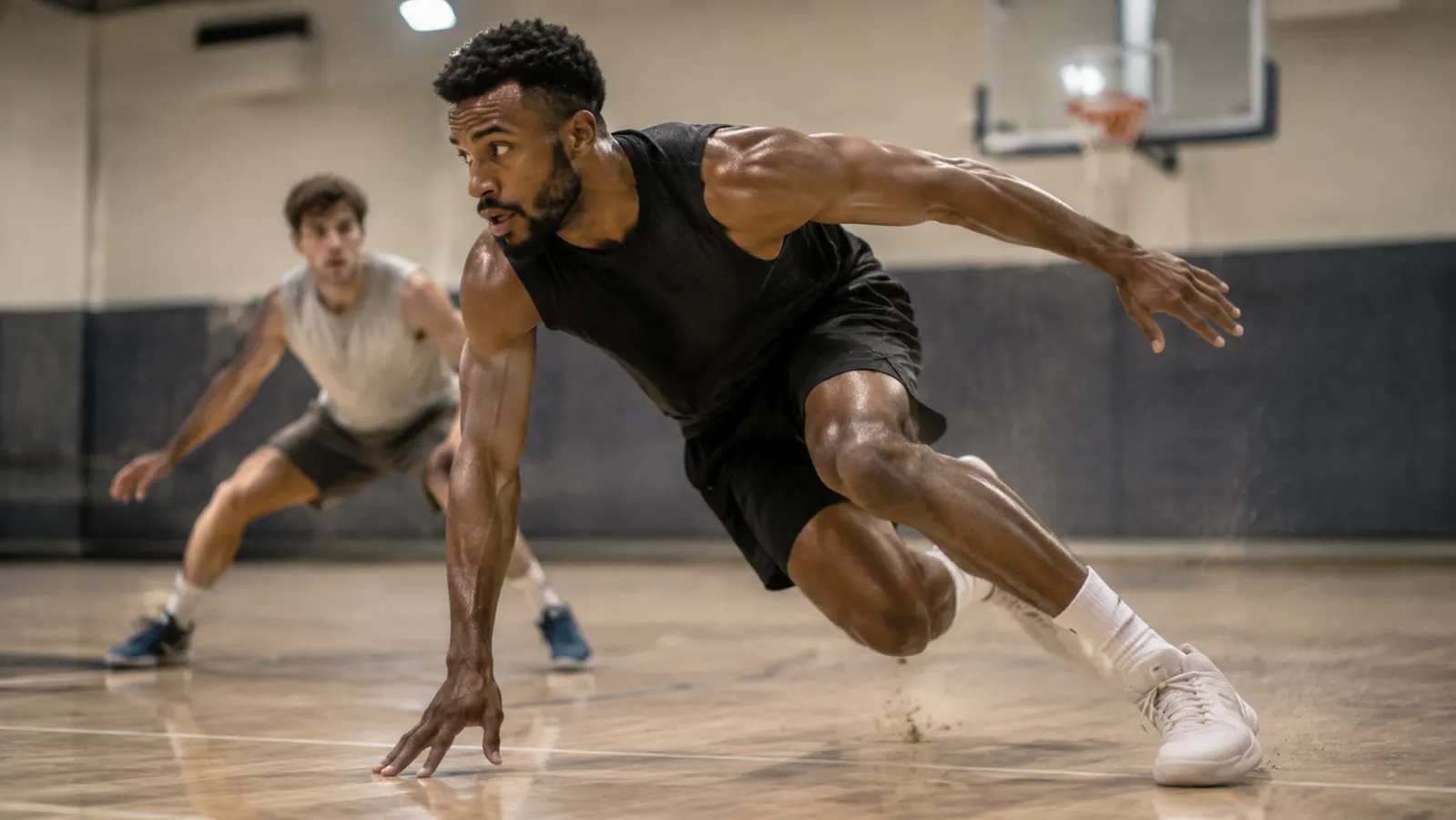
The trade is real, though. There is a layer between your foot and the hardwood, and it dulls the little signals you use to balance. The first few games I felt a half step late on hard cuts because I could not feel the floor the way I wanted. I adjusted. A lighter, quicker player might not want to.
The trade is court feel. If you are a guard who wants to feel every seam in the floor, this is not that shoe. There is a layer of padding between your foot and the hardwood, and you notice it on quick defensive slides where you want immediate feedback. I mostly play a step slow anyway, so it suits me. A 25-year-old would probably find it vague.
Fit: Where This Shoe Divides People
This is the section to read twice if you have a wide forefoot.
In my normal men's 11.5, the toe box pressed on the outside of my forefoot by the end of the first game. Not agony, just a persistent squeeze that I felt when I took the shoe off. The synthetic leather upper does not give much, so time alone was not going to fix it. I went to thinner socks and stopped cranking the laces down at the midfoot, and that solved it for me.
My first fix made it worse. I tried thicker socks, thinking the pressure would spread out. It did not. The squeeze got sharper on the outside of my forefoot by the end of the first half. I went the other way: thin socks, the laces loosened one row at the midfoot, and the shoe finally stopped arguing with my foot.
I also stopped yanking the laces tight at the top. That sounds obvious, but when you have played in stiff leather shoes for thirty years, you lace everything like a work boot. The Witness 8 does not need that. Snug at the midfoot, normal at the top, and the pressure band across the top of my foot went away.
If you know your forefoot runs wide, do not fight this shoe. Go a half size up or plan on thin socks. If your foot is normal to slightly narrow, the fit is fine and probably better than fine, because the shoe holds your midfoot without sliding.
Length is true. Heel hold is solid. The lace-up closure and mesh lining do their jobs. It is one dimension of fit that is stubborn here, and it is the one that catches people who order their usual size without thinking.
Ankle Support, and the Brace Question
I will be straight with you, because this is the part I care about most. This is not an ankle-support shoe in the sense that a stiff, rigid shoe is. The ankle area is padded and comfortable, and it moves with you more than it locks you down.
For me that was fine only because my brace does the work. My lace-up brace goes on my left ankle inside the shoe. The first night I wore the brace with this shoe, the top edge of the brace pressed against the tongue. Not painful, just noticeable on every stride. I loosened the top two laces, retied them, and played the rest of the night without thinking about it. That has been the routine ever since. Once I got the lacing right, the combination was stable and I stopped thinking about it. I have not rolled that ankle since I started wearing the brace, and this shoe did not change that.
I tested it the way I test every shoe. A few hard defensive slides to my left, a couple of rebounds where I came down on one foot, and one awkward stop in transition where I felt the shoe roll slightly before it caught. Nothing turned. The brace did its job and the shoe stayed with me.
If you are relying on the shoe itself to keep your ankle from turning, and you have a history like mine, be honest with yourself. Buy the brace. This shoe is a comfortable padded shoe, not a cast.
Read your size and width carefully, then check what is left in stock
The honest take on fit: normal to narrow foot, order your usual size. Wide forefoot, go up a half. Sizes move, so look at what is actually available today.
Amazon See Sizes and Today's Price on Amazon →Durability at Seven Months
No tears. No separation at the toe. The outsole has worn at a normal rate, and the mesh lining has not rubbed through anywhere. The upper does show creasing across the forefoot, which is what synthetic leather does, and it is cosmetic.
The insole flattened faster than I expected. By month four I could feel the difference under my arch. The shoe still plays fine, it just rides a little firmer now. That is a small annoyance, not a defect, and it is common in this range.
I checked the outsole after every outdoor session, expecting the usual. The rubber under the ball of my foot is the first place to show wear, and it has. The edge near the toe is scuffed from dragging my foot on drives. Nothing has separated. The mesh lining at the heel has not rubbed through, which is the failure I usually find first in cheaper shoes.
What I Liked
- Dependable bite on dusty indoor hardwood, even on nights nobody swept
- Cushioned ride that spared my knees over three-game pickup nights
- Solid heel hold when I cut hard, with no sliding inside the shoe
- Held up through seven months of weekly play and a summer of asphalt
- True to length, with a lace-up closure that lets you tune the midfoot
Where It Falls Short
- Standard width squeezed my slightly wide forefoot for the first few weeks
- The upper does not stretch much, so thin socks or a half size up may be needed
- The insole flattened by month four and needed replacing
- Not a real ankle-support shoe if you have a history of rolls
- Cushioning dulls court feel for quick guards who want a firm ride
Who This Is For
The adult rec player who wants a cushioned, dependable basketball shoe without paying signature-shoe money, and who plays two or three times a week on indoor hardwood. Normal to slightly narrow foot, or a wide foot willing to size up. Someone who does not need to feel the floor through the sole and does not expect the shoe itself to be their ankle insurance.
It is also a reasonable buy for a parent shopping for a teen who plays but is not yet hard on shoes, provided you check the width first. The Nike name and the cushioning make it an easy yes at the register. The fit is the thing to verify before you hand over the box.
Who Should Skip It
Skip it if you have a wide forefoot and no interest in sizing up or changing socks. Skip it if you are a quick guard who wants a low, firm, floor-feeling ride, because the cushioning here is generous and a little vague. Skip it if you have an ankle history and were hoping the padded ankle area would be enough, because it will not be. And skip it if you are chasing the feel of a top-tier signature model, because this is not that and does not pretend to be.
One more honest note. If you already own a pair of shoes you like and you are only buying this as a spare, you probably do not need it. I did, because I play enough nights that a damp shoe is a real problem. If you play once a week, put the money somewhere else.
The Verdict
Seven months in, the Nike LeBron Witness 8 has earned its spot in my bag. It grips a dusty floor, it protects my knees, and it has held together through a summer of asphalt. It is not a shoe I would call special, and I would not pay signature money for it. At what it actually sells for, it is a sensible buy.
Just go in knowing about the forefoot squeeze and the flexible, padded ankle area. Those two details are the whole decision. Get them right and this is a good basketball shoe for a grown-up who plays pickup twice a week and wants to wake up without sore knees.
For longer-term notes on the same pair, and how it stacks up against shoes that cost more, see the pieces linked below. Both are written from the same bag, the same gym, and the same left ankle.
Seven months, one pair, and I would buy it again at this price
If your foot is normal to narrow and you play on indoor hardwood, this is a straightforward yes. Check your size and today's price on Amazon first.
Amazon Check Today's Price on Amazon →