
For about fifteen years I assumed my feet were the problem. Every standard-width basketball shoe I laced up felt fine in the store and felt like a vise by the second game. The pinch always landed in the same place, across the ball of my foot just behind the toes, and by the fourth quarter I was thinking about my shoes instead of the possession. I tried going up half a size. That bought me length and a lot of heel slip. I tried thinner socks, which just moved the pressure around. What I actually needed was a shoe built wider at the front, and I did not work that out until I bought a pair of FitVille wide basketball shoes in September 2025.
I wear them now for the Sunday morning men's league at the church gym, two games back to back, roughly once a week. I am 6 foot 1 and about 205 pounds, and I play guard and wing at 47, which means I do not get to waste a game on sore feet. My forefoot is slightly wide. Not wide enough to need anything custom, wide enough that most shoes punish me late. Here is what actually changed, in the order I noticed it.
The shoe that fixed the pinch instead of hiding it
Extra-wide high-top built for players whose forefoot has been squeezed by standard-width shoes for years. Lace-up closure, cushioned foam insole, ankle-height collar.
Amazon Check Today's Price on Amazon →The front of the shoe is actually built wide, not just long
FitVille sells this high-top in a wide and an extra-wide fit, and that is the entire reason it works. On a standard shoe, the widest part of the upper sits narrower than the widest part of my foot, so the material presses down across the ball of the foot with nowhere to go. The extra-wide version puts the widest part of the shoe where the widest part of my foot is. Nothing rubs. Nothing goes numb. The first night I wore them for a full game I kept waiting for the pinch to show up, and it never did.
You stop sizing up to fake width
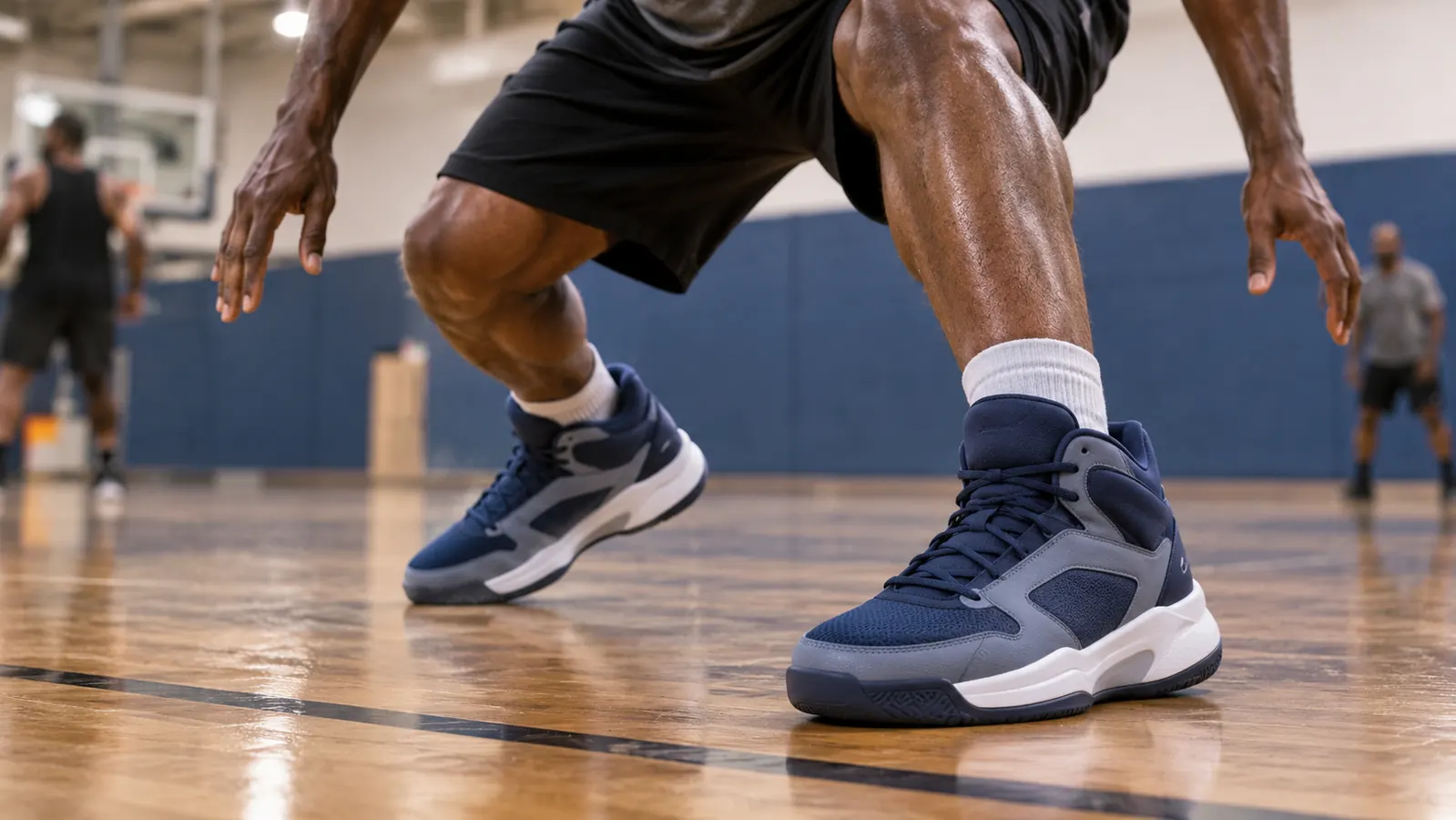
Every workaround I had been using for years was a way of borrowing width from length. A half size up, a looser lace job, a thinner sock. All of it costs you heel lock, which is a bad trade in a game built on cutting. With the wide fit doing the work up front, I went back to my true size, men's 11.5, and my heel sits where it should. I have not had that sliding, blister-making sensation at the back of the shoe once in fourteen months of Sundays.
The high-top holds your ankle without squeezing your forefoot
I rolled my left ankle badly about ten years ago, and I have cared about ankle coverage ever since. The problem with a lot of high-tops is that the support comes from a snug overall fit, which puts the squeeze right back on the front of the foot. This one gets its height from the collar shape, not from clamping the whole shoe down. I get the coverage I want up top and I still have room across the ball of my foot. Both things at once, which is rarer than it should be.
The laces let you tune pressure instead of living with it
The lace-up closure sounds like a nothing detail until you have spent a season with a shoe that only fits one way. I can leave the bottom two eyelets loose over the widest part of my forefoot and pull the upper lacing snug for a locked-in feel through the midfoot. That is the difference between a shoe that fits and a shoe that fits the way I want it to on a given night. My feet swell by the second game on Sundays, and I just retie. No drama.
The foam insole takes the sting out of the late games
The insole is foam, and it is the part of the shoe my feet actually talk to me about. On hardwood, the ball of the foot takes a beating on every hard stop, and a thin flat insole turns that into a hot spot by the fourth quarter. This one has enough give that I am not feeling the floor through it. I have swapped insoles into plenty of shoes over the years. I have not bothered with this pair, which tells you what I think of the one it came with.
Moderate to high cushioning suits a heavy guard
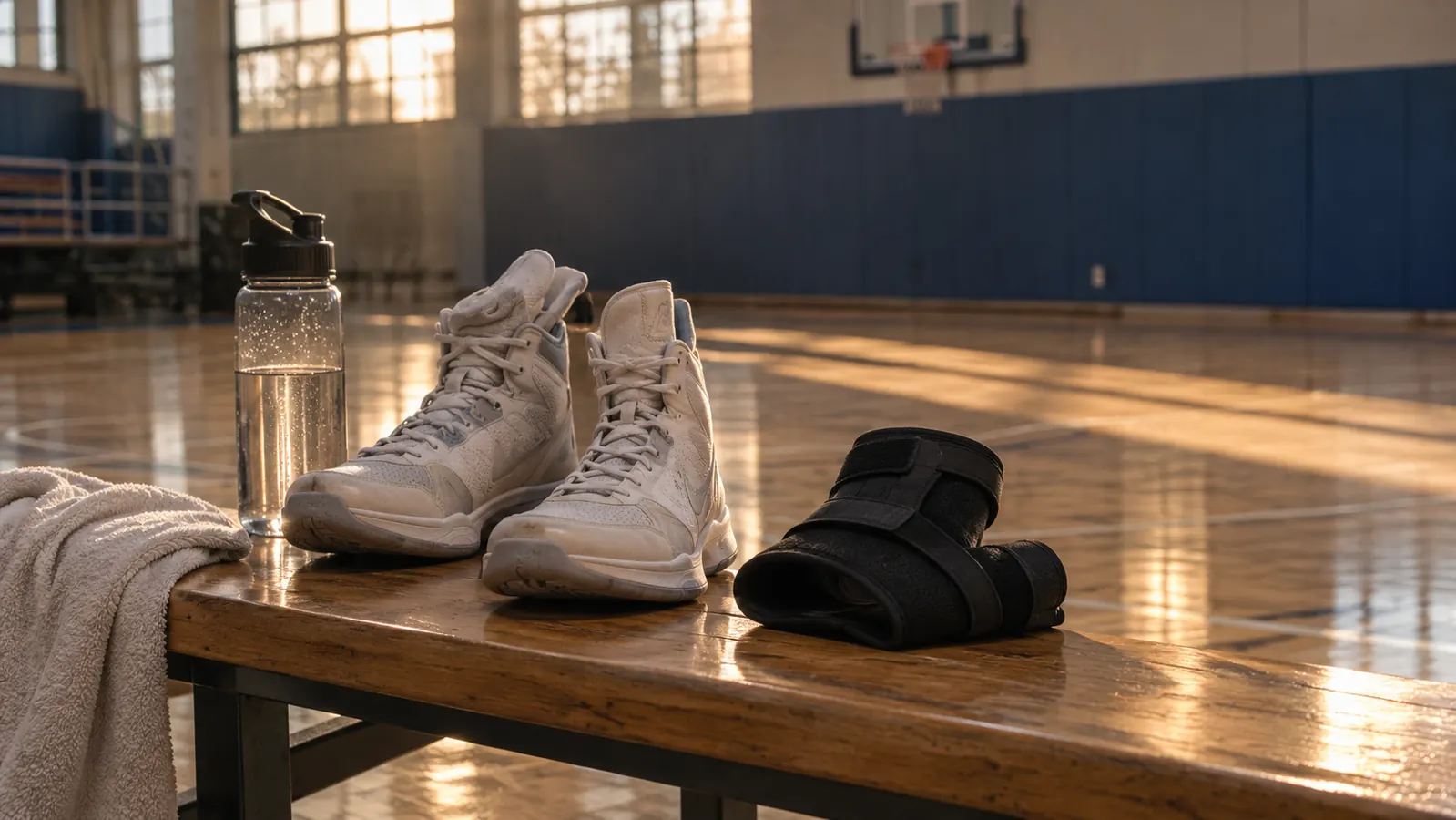
At 205 pounds I land hard, and I have no interest in a shoe that makes me feel every one of those landings. The cushioning on this pair sits in the moderate to high range, which is the right zone for a rec player who is not getting younger. It is not so soft that I feel disconnected from the floor on a defensive slide, and not so firm that my knees are filing complaints on Monday morning. I notice it most in the second game, when I used to feel every step.
Two games back to back on a Sunday, and the spot behind my toes that used to go numb never showed up once.
The closed toe holds its shape through a full season
A wide toe box that collapses is worse than a narrow one, because you have room and then you lose it. Fourteen months in, the front of this shoe still holds the shape it had when I took it out of the box. There is no crease running down over my toes, no sagging at the tip. I am careful with my gear but I am not gentle with it. These have been in a gym bag, on a bench, and through a Columbus winter in a car trunk, and the toe still looks like a toe.
Two back-to-back games without a shoe swap
Sunday league means two games, and in standard-width shoes the second one was always worse than the first. That is the tell. If a shoe fits, game two feels like game one. With this pair I stopped bringing a backup. I lace up once in the parking lot, play both, and drive home. Fourteen months of Sundays and I have never once pulled them off at halftime to rub the front of my foot, which used to be a ritual I did not even notice I had.
It fits over a lace-up ankle brace
I wear a lace-up ankle brace on my left ankle in every game, and it has been that way since December 2025. In a standard-width shoe, adding a brace means subtracting room, and the forefoot is where that bill comes due. The extra-wide FitVille has enough volume that the brace goes on without turning the front of the shoe into a clamp. That is the detail I would tell any player with an old ankle injury to check before buying anything.
It separated my feet from my age
I had quietly accepted that sore feet after a Sunday doubleheader were just what 47 feels like. They were not. They were what a narrow shoe on a slightly wide foot feels like. That is the honest version of this whole list. I am not faster than I was at 30 and no shoe is going to change that. But I stopped thinking about my feet during games, and that is worth more to me than any spec on the box. I bought these myself and I would buy them again.
What I'd Skip
Skip the size-up trick entirely. If a shoe pinches across the ball of your foot in your true size, more length will not fix it, it will just hand you a heel that slides. Skip the thin-sock workaround too, and skip the lacing patterns people post online as a cure for a narrow toe box. They relieve pressure for a quarter and then the shoe goes back to being what it is. I would also skip this shoe if your forefoot is normal width and standard shoes have never bothered you, because the extra volume would just feel sloppy. And know what you are buying: this is not a water-resistant shoe, so I do not wear it at the outdoor park court after rain, and a high-top collar is always going to feel like more shoe on your ankle than a low cut. Fourteen months in, those are the only two things I would flag, and neither one has kept me off the floor.
Your forefoot has been asking for this for years
Extra-wide high-top with ankle coverage, a cushioned foam insole, and a lace-up fit you can tune. The pair I have worn every Sunday since September 2025 and have not had to replace.
Amazon Check Today's Price on Amazon →