
Ten years ago I came down on another man's foot during a Thursday run at the rec center, and my left ankle folded under me like a lawn chair. I heard the pop before I felt it. By the time I got my shoe off, the joint looked like a softball had been taped to my leg. I was in my late thirties then, close enough to forty that the recovery did not go the way it did at twenty-five. It took months before I trusted that ankle to hold me on a hard cut.
Here is what nobody tells you about the years after a bad roll. The ankle gets loose. Not sore, not swollen, just loose, in a way you notice most when you plant and go. I spent most of a decade in a pull-on compression sleeve, which is basically a sock with ambitions. It kept the swelling down on the bad days and it did nothing at all about the rolling. I could feel that ankle thinking about going over, and the sleeve had no opinion about it. What changed things was a lace-up brace from McDavid.
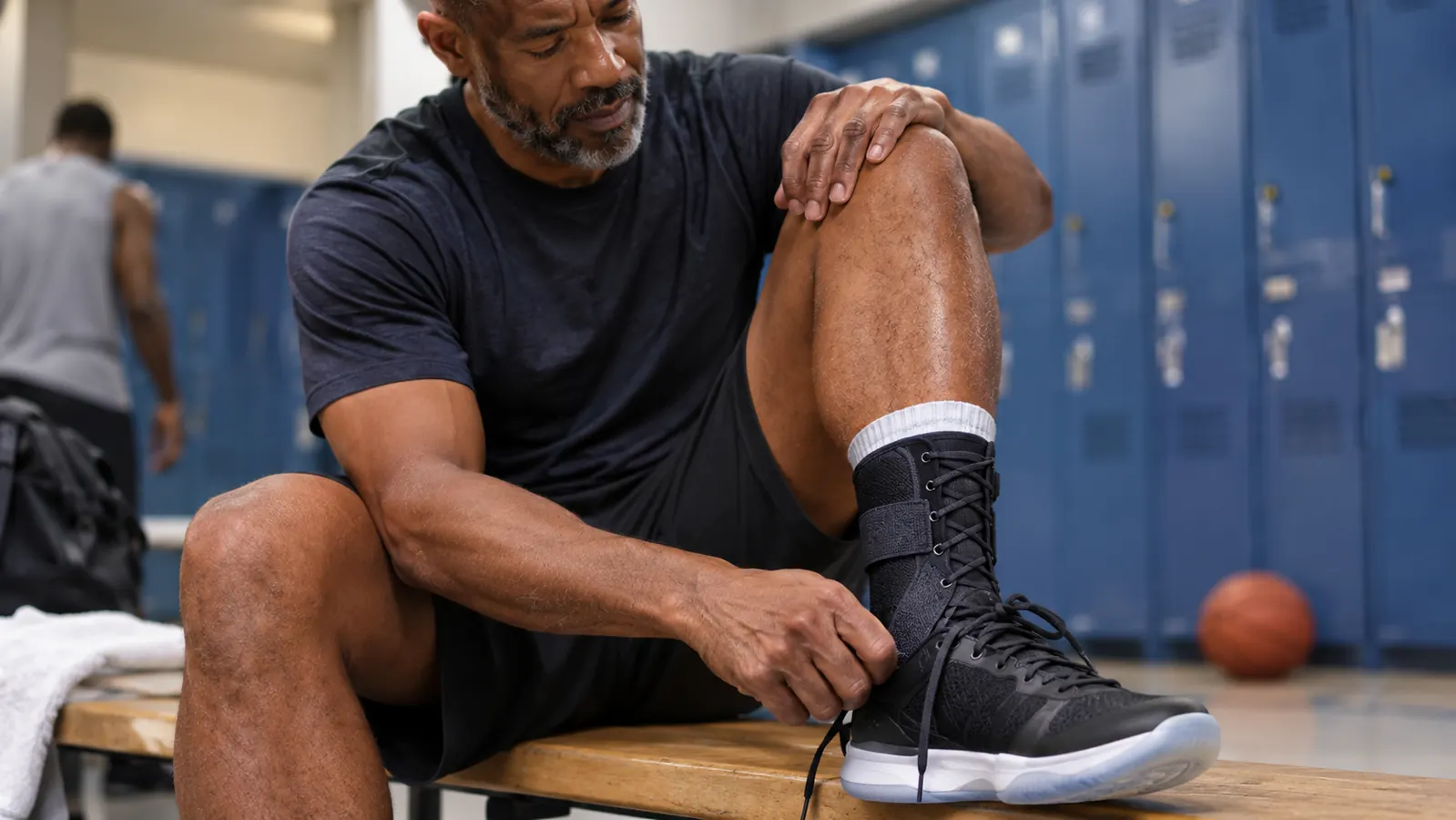
The McDavid Lace-Up Ankle Brace is a low, lace-up support, not a slip-on. You lace it up the front the way you lace a shoe, then two straps pull across in a figure 8 and lock down with hook and loop. Rigid side stabilizers run down both sides of the ankle. The whole thing weighs a shade over three ounces. It goes inside your basketball shoe, not over it, which matters if you have ever tried to cram a boot into a sneaker.
The first night I wore it was a Tuesday pickup run at the rec center, inside my Under Armour Lockdown 7. I got there twenty minutes early because I did not want to be the guy fumbling with straps while nine other men waited on him. It took me about ninety seconds to get the brace on and the shoe laced over it. By the second week it was forty. If you have ever laced a hockey skate or a wrestling shoe, the motion will feel familiar.
I came down on the side of somebody's sneaker, and my ankle tilted about a third of the way it used to. Then it stopped.
Eleven months, three nights a week, one brace
I bought the McDavid Lace-Up Ankle Brace in December and it has been on my left ankle for every game since. Sized off the McDavid chart, worn inside the shoe, hand washed and air dried.
Amazon Check Today's Price on Amazon →Here is what it actually does on the floor. The figure 8 straps are the part that matters. They start on the outside of your foot, cross over the top, and anchor on the other side, so when your ankle begins to tilt the strap goes tight before the joint does. The rigid side stabilizers give the ankle something to lean against. It is not a cast and it is not a walking boot. It is a set of guardrails that lets you play without thinking about the last time.
The first hard cut I made in it, I braced for the old feeling. It did not come. Later that same night I went up for a rebound in traffic, came down on somebody's sneaker, and the ankle tilted maybe a third of the way it used to and then stopped. That is the entire review, really. It tilted and stopped. I have not rolled that ankle once since December, through Tuesday and Thursday pickup and a Sunday league game every week.
Now the honest part, because I am not going to sell you a brace like it is a cure. It takes a minute to put on. It is one more thing between you and the floor. It also crowds the inside of a shoe, so loosen your laces a good half inch before you slide your foot in, and if your game shoes are already snug across the midfoot you will feel it for the first few runs. I wear a men's 11.5 with a slightly wide forefoot and the Large brace fits me inside a normally laced shoe. Read McDavid's size chart instead of guessing off your shoe size, especially if your foot is narrow.
It has ridden inside four pairs over eleven months: the Lockdown 7 on Tuesdays, the adidas Own the Game 3.0 on Thursdays, the FitVille wide high-top on Sunday mornings, and the LeBron Witness 8 on summer nights at the park court. It works in all four. The high-top takes more patience because there is more shoe to lace around it, but that is the shoe's fault, not the brace's.
Care is simple, which is good, because it is hand wash only. I rinse it in the sink with a little soap every couple of weeks, squeeze it out, and set it on top of the washing machine to air dry. It never goes in the dryer. Eleven months in, the straps still hold and the laces have not frayed.
And what it is not: it is not a substitute for the rehab you owe an old sprain, and it will not make you twenty-five again. I still do not jump off one foot in traffic the way I did in my twenties. I just do not worry about the landing.
What I'd Tell You If We Were Sitting at My Kitchen Table
If you caught me at the kitchen table after a Sunday game and asked whether the hassle is worth it, here is what I would say. If your ankle has gone over on you once and you still want to play, buy the lace-up kind, not the sleeve. The sleeve is for swelling. The lace-up is for trust. Give it two weeks of pickup to learn the straps, take the sizing off the manufacturer's chart rather than off your shoe size, keep the laces on your game shoes a little looser than you like them, and wash the thing by hand. That is the whole approach. It is not exciting. It just works, three nights a week, eleven months running.
Your ankle remembers. Give it something to lean on.
The McDavid Lace-Up Ankle Brace goes inside the shoe you already play in, laces on in about a minute, and weighs a shade over three ounces. That is a fair trade for not thinking about your ankle on every cut.
Amazon Check Today's Price on Amazon →