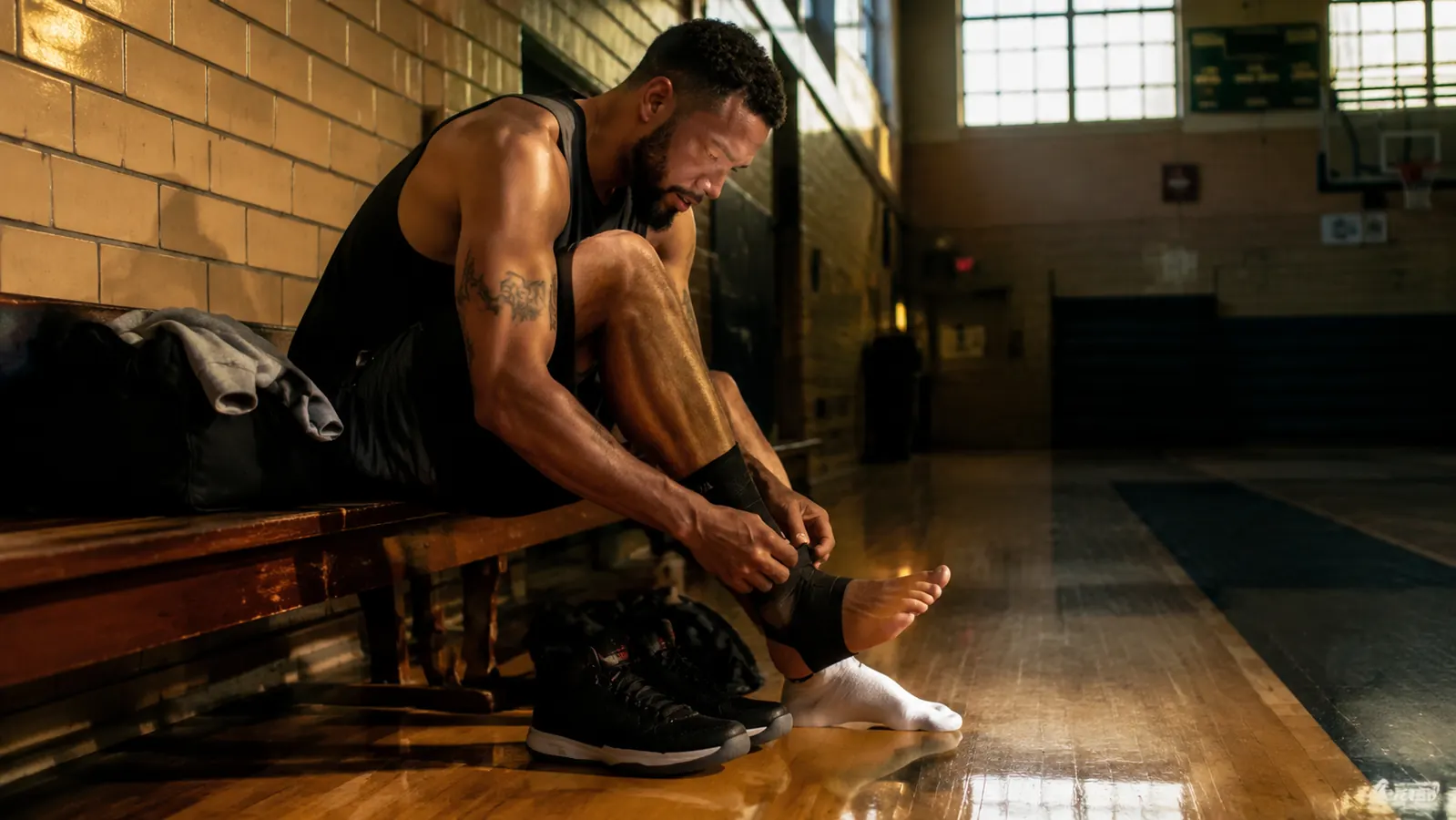
The first time I rolled my left ankle I was 37, coming down on somebody's foot during Tuesday pickup at the rec center. That was ten years ago and I still think about it every time I leave the floor. What I remember is the sound, and the way the gym got quiet while I sat there deciding whether to be dramatic about it. I was dramatic about it. I limped to the car and drove home with the window down like that would help.
For a long stretch after that I played in a plain pull-on compression sleeve, because a guy at the gym handed me one and it seemed better than nothing. Then last December I switched to the McDavid Lace-Up Ankle Brace, and I have worn it on that left ankle in every game since, inside every shoe in my rotation. That is eleven months of Tuesdays, Thursdays and Sunday mornings, and it is why I have an opinion worth writing down.
Here is the short version, since I know why you clicked. The McDavid Lace-Up Ankle Brace protects more. It is not particularly close. Rigid side stabilizers and a lace-up figure 8 wrap do something a stretchy tube cannot do, and if your ankle has genuinely gone over on you, the brace is what I would put on it. The sleeve is more comfortable, faster to put on, and cooler on a night when the church gym has no air moving. Those are real advantages and I am not going to talk you out of them. But the question in the title is which one protects more, and the answer is the brace. The rest of this is about whether you want what it gives you and whether you will put up with what it takes from you.
| McDavid Lace-Up Ankle Brace | Sleeve-Style Ankle Support | |
|---|---|---|
| What it is built to do | Lace-up figure 8 wrap with rigid side stabilizers that locks the foot and ankle into one unit | Stretch fabric tube that adds warmth and light compression around the joint |
| Resistance to rolling | Rigid side stabilizers give a hard stop before the ankle turns past its range | Soft stretch gives a little reminder and no hard stop at all |
| Adjustable tightness | Laces plus a hook and loop strap you can tighten or ease at halftime | One fixed stretch fit, whatever the fabric was knit to be |
| Playing a full game on a cranky ankle | This is what I wear for real games against people who land on feet | Fine for a walk or a shootaround, thin for hard cuts in traffic |
| Time to put on | Lace it, wrap the strap, check the sit, usually a minute or two | Pull it on like a sock, about five seconds |
| Room inside the shoe | Adds bulk; I let the laces out a notch on that shoe | Thin enough to disappear in most shoes |
| Heat and sweat | Polyester laced over the top, runs warm in a gym with no air | Breathes better and does not hold heat the same way |
| Care | Hand wash only, and it has to dry between games | Throw it in with the towels |
| Wearing it all day under regular shoes | Not what it is for, too much under a work boot | Fine under normal shoes for a stiff ankle at work |
| Fit range | Listed as Large on my foot, and the laces take up the slack on a slightly wide forefoot | Sized by stretch, and the elastic softens over a season |
How I've Worn Both, and Why I Switched
I want to be fair to the sleeve, because I wore one for years and I did not feel sorry for myself about it. A pull-on sleeve is a tube of stretch fabric that hugs the ankle and the lower leg. It adds a little compression, it keeps the joint warm, and it makes a cranky ankle feel less cranky when you are walking around the house or standing at work. Mine went on in about as much time as it takes to pull on a sock, and it never once made me late.
What it does not do is stop your ankle from going over. That is not a knock on the design. That is what the design is for. If the joint has not been injured, or if your ankle is just stiff and grumpy in the morning, a sleeve is a sensible thing to own. The trouble is the first time you come down on somebody's foot in traffic, the sleeve is not going to be the thing that saves you, and staying upright was the entire reason I was wearing anything at all. I had spent years mistaking the feeling of support for the fact of it.
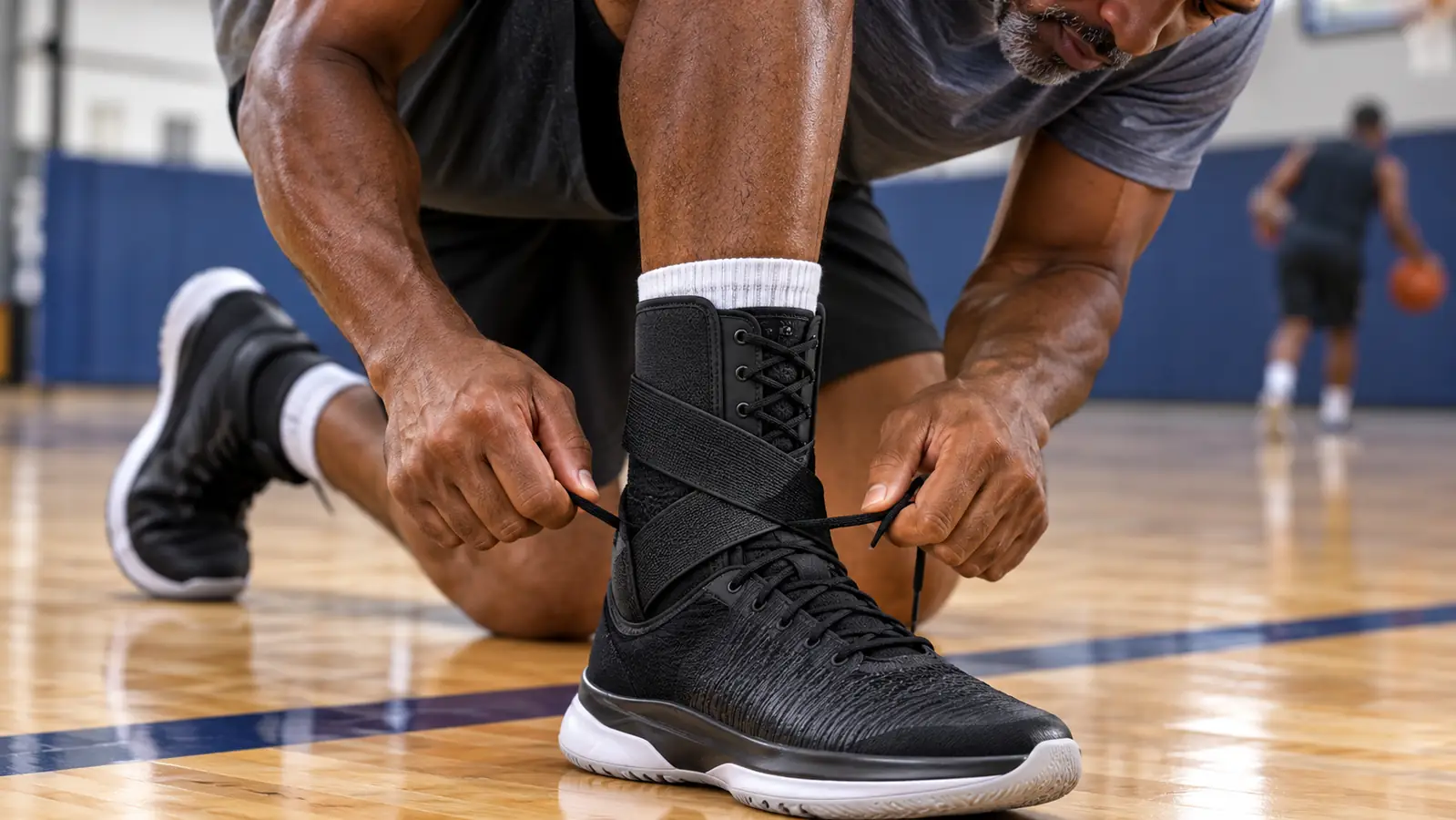
In December I ordered the McDavid lace-up because a teammate had one and I was tired of guessing. The listing describes it as a figure 8 design with rigid side stabilizers, adjustable lacing, a hook and loop closure, polyester, hand wash only, and a listed weight of 3.2 ounces. That reads like a spec sheet and it is one, but the important part is what those pieces do when you tighten them. You lace it up like a boot, you pull the strap around, and the whole thing draws your foot and ankle into one solid unit. The first time I stood up in it I could feel the side pieces sitting against the outside of my ankle, like a fence post on either side.
I have worn it in every game since. Tuesday pickup at the rec center in my Under Armour Lockdown 7, Thursday in the adidas Own the Game 3.0, Sunday in the FitVille for two men's league games back to back. Somewhere in the fourth game of a long night, when your legs are gone and you are landing on tired feet, is where you notice the difference. My ankle does not get that loose, wobbly feeling it used to get in the sleeve. I am not saying I cannot roll it. I am saying the brace gives me a hard stop before it goes too far, and I have not rolled it since December.
Where the McDavid Lace-Up Wins
Protection is the whole point, so I will start there. The side stabilizers are rigid. When your foot starts to tilt, they resist it, and the wrap pulls everything tight around the joint instead of stretching with it. In a sleeve, the fabric gives. That is the difference between a guardrail and a painted line on the road. Both tell you where the edge is. Only one of them stops you from going over it.
The second thing is that the brace holds its shape over a whole season instead of softening. The laces let you take up slack any time you want. If it feels loose at halftime, I tighten it at halftime. A pull-on sleeve is knit to one size and stays there while the elastic slowly gives up, and by the end of a winter you can feel it not hugging the way it did in November. The McDavid in month eleven laces up the same as it did in week one.
Adjustability matters more than people expect if you have a slightly wide forefoot like I do. I am in a men's 11.5 and my left foot is a touch wide, and the brace is sized Large on me. The laces let me set the fit across the top of my foot instead of forcing my foot into a fixed tube. I let the laces out a notch on the left shoe of whatever pair I am wearing that night and tie them back down, and that is the whole adjustment.
A sleeve makes a cranky ankle feel better. The McDavid keeps the ankle from going over in the first place, and only one of those is the reason I put something on my left foot before every game.
Where Sleeve-Style Support Wins
Now the other side, because this is not a closeout pitch and the brace has real annoyances. The sleeve wins on time and on heat. Pulling a sleeve on takes seconds. Lacing the McDavid, pulling the strap around, checking that it sits where you want it, that is a minute or two before every game and another minute when you are tired and just want to go home. In a church gym in July with the doors shut, the lace-up runs warm. Polyester, laces across the top, stabilizers against the ankle, it is not the coolest thing you will wear that day.
It also takes up room in the shoe. 3.2 ounces is light on a kitchen scale and I would not call the thing heavy. But light on a scale and thin inside a high-top are two different measurements. The sleeve disappears in a shoe. The brace, you know it is there, especially in a low-cut pair with a snug collar.
Care is the last one. Hand wash only means it does not go in with the towels, and it needs to dry out between games. If you play Tuesday and Thursday, that is manageable. If you play three nights running, you need a plan. And there is one use the sleeve is genuinely better at: an ankle that is just stiff or puffy in the morning. I have put a sleeve on under a normal shoe and gone to work at the school without thinking about it once. I would not do that with the lace-up. It is a basketball item, not an all-day item.
The one I lace up on my left ankle before every game
Figure 8 wrap, rigid side stabilizers, adjustable laces, hook and loop strap, 3.2 ounces. Eleven months of twice a week and it still laces up the same.
Amazon Check Today's Price on Amazon →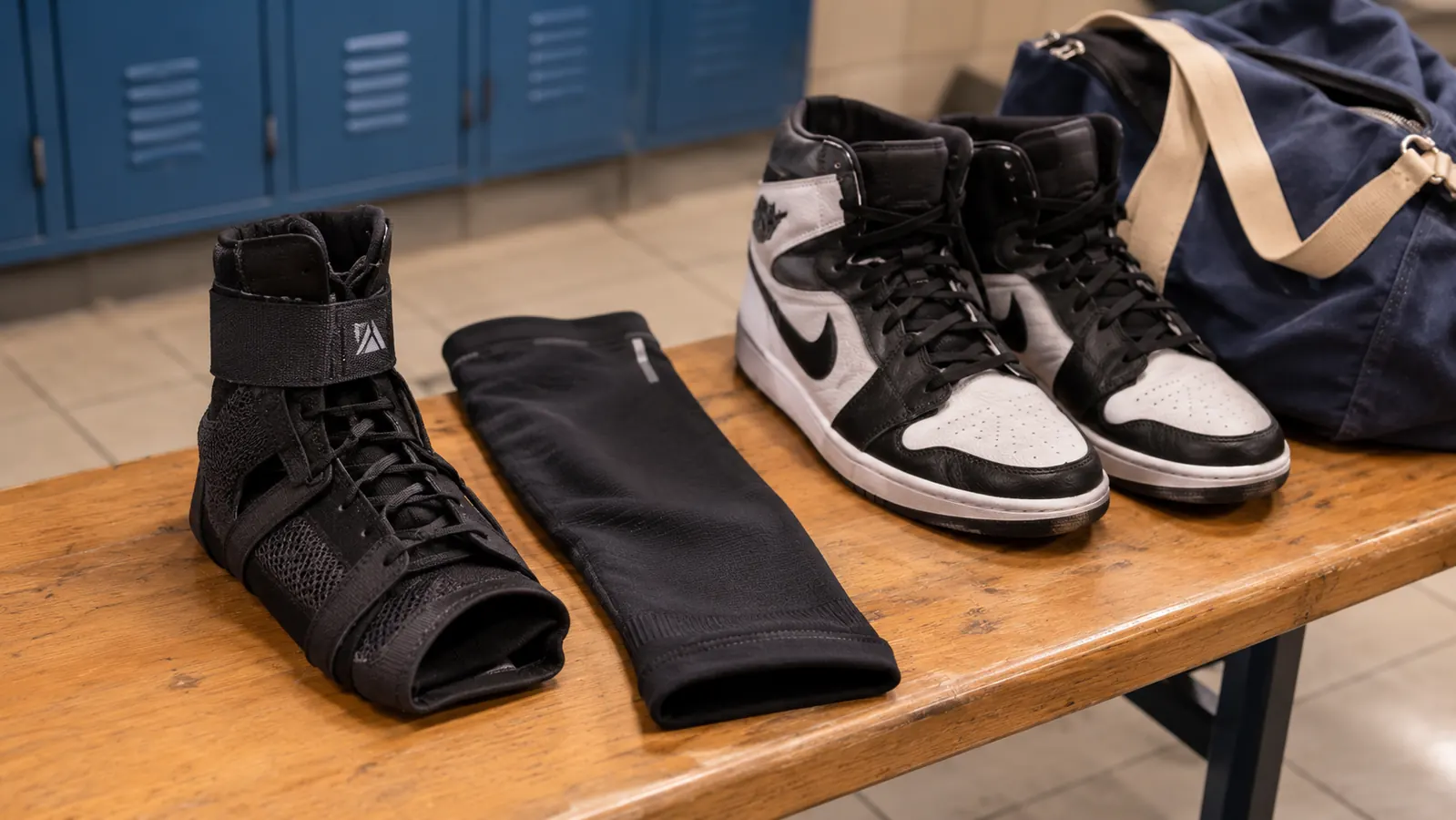
Fit and Lacing Notes Before You Order
Sizing is the part people get wrong. Measure around your ankle and follow the size chart instead of guessing off your shoe size. The laces buy you some room if you are between sizes, but the stabilizers need to sit on the sides of your ankle, not out in front of it. If the brace is too small, the laces will not close the gap and you will feel the edges digging in at the base of your shin.
The other variable is your shoe. I wear the brace inside all four pairs I rotate through and it works in all of them, but high-tops handle it better than anything low. There is less shoe to fight with and the collar holds the whole package together. With a low shoe you will want to loosen the laces more, and you may feel the top of the brace against the tongue.
Put it on standing up the first few times so you can feel where the pressure lands. The strap should pull across the front of your ankle and around, snug but not so tight that your toes go cold. If you feel numbness or tingling, back it off. That is true of any ankle support and it is worth saying out loud. Then walk a lap before your game starts. The first time I laced mine in a locker room and went straight into a layup line, I had it too tight and spent a timeout fiddling with it. Now I lace it, walk the hallway, and then go.
Who Should Buy Which
Buy the McDavid lace-up if your ankle has actually gone over on you, if you have rolled it more than once, or if you are playing real games against people who are going to land on your foot. That is who it is built for. It is also the right pick if you are the parent of a teenager starting to play hard and you want something that will last a season. Jalen is 15 and plays JV, and I have watched enough of his games to know how often a kid comes down on somebody's foot in the paint.
Buy a sleeve-style support if your ankle is basically fine and you want warmth and light compression, if you want something you can wear all day under regular shoes, or if you want a simple thing to keep in a gym bag for the nights when your ankle feels a little off and you are not planning to play hard. There is no shame in it. I owned one for years.
One honest note for both. If you are two days out from a fresh sprain, an ankle brace from an online listing is not the answer to that. Get it looked at. What I am talking about here is the long game, the ten years after the injury when the joint is healed but not the same, and you are deciding what to wear to keep it that way.
I gave the sleeve years of my life and it is a fine piece of gear. It just was not doing the job I thought it was doing. The McDavid does the job, and I stopped thinking about my left ankle on the floor, which is the highest compliment I can give a piece of equipment.
Still the brace on my left ankle, two games a week
Rigid side stabilizers, figure 8 lace-up, adjustable hook and loop strap, listed at 3.2 ounces. If your ankle has gone over before, this is the one that stops it.
Amazon Check Today's Price on Amazon →