I rolled my left ankle badly about ten years ago, and ever since then I have been the guy who checks the floor for wet spots before pickup and keeps a brace in his gym bag. For years I wore a pull-on compression sleeve. It was better than nothing, but it never felt like real support when I landed on someone's foot. Eleven months ago, in December 2025, I bought the McDavid Lace-Up Ankle Brace. I have worn it on that left ankle in every game since, and I finally have enough court time behind it to say something useful.
This is not a first-day impressions post. I am 47, 6 foot 1, about 205 pounds, and I play pickup at my neighborhood rec center in Columbus on Tuesday and Thursday nights, plus a Sunday morning men's league in a church gym. I play guard and wing, which means a lot of cutting, stopping, and landing on other people's feet. The McDavid brace has been in the rotation for all of it. Here is what held up, what annoyed me, and who I think should buy it.
The Quick Verdict
A real lace-up brace that has kept my left ankle stable through eleven months of rec-center and men's league games. It takes a minute to put on, and that minute is worth it.
Amazon Check Today's Price →The ankle support I stopped thinking about by the second quarter
I bought the McDavid with my own money after years in a sleeve that rolled with my ankle. It has been on my left foot for every game since December 2025. If you want the same setup, check availability on Amazon.
Amazon Check availability on Amazon →How I've Used It
My routine is fixed. Tuesday night is pickup at the rec center. Thursday night is pickup again. Sunday morning is the men's league at the church gym, usually two games back to back. I put the McDavid brace on my left ankle before I put on my shoe, and I wear it for the whole session. I do not take it off between games on Sunday. I loosen the laces, let my foot breathe for a minute, and lace it back up.
The first Thursday I wore it, I made a mistake. I laced the brace tight before I put my shoe on. Twenty minutes into the run my left foot was going numb below the ankle, and I could feel my toes getting cold. I sat on the bleachers, pulled the shoe off, backed the brace off by a couple of eyelets, put the shoe back on, then tightened the brace through the shoe. That fixed it in about thirty seconds. I have done it in that order ever since: shoe on loose, brace snugged, then shoe laces. It sounds fussy. It takes about as long as tying a proper double knot.
I wear a size Large. My street shoe is a men's 11.5, and I have a slightly wide forefoot, so shoe volume matters to me. The brace has fit inside every shoe I have worn it with: the Under Armour Lockdown 7 on Tuesdays, the adidas Own the Game 3.0 on Thursdays, the FitVille wide high-top on Sundays, and the Nike LeBron Witness 8 when I need a spare or play outdoors in the summer. I am not saying it disappears in every shoe. I am saying I have not had to change shoes to wear it.
Before this I wore a pull-on compression sleeve for years. The sleeve was soft and easy, and I could pull it on in the car in the parking lot. It also gave me a false sense of security. When I planted on the side of my foot, the sleeve rolled with my ankle. There was no resistance anywhere, just fabric moving with the joint. I never trusted it on a hard cut, and I found myself avoiding certain drives because of it. The McDavid does not do that. The tradeoff is that it takes longer to put on, and I will get to that.
What the McDavid Brace Actually Does
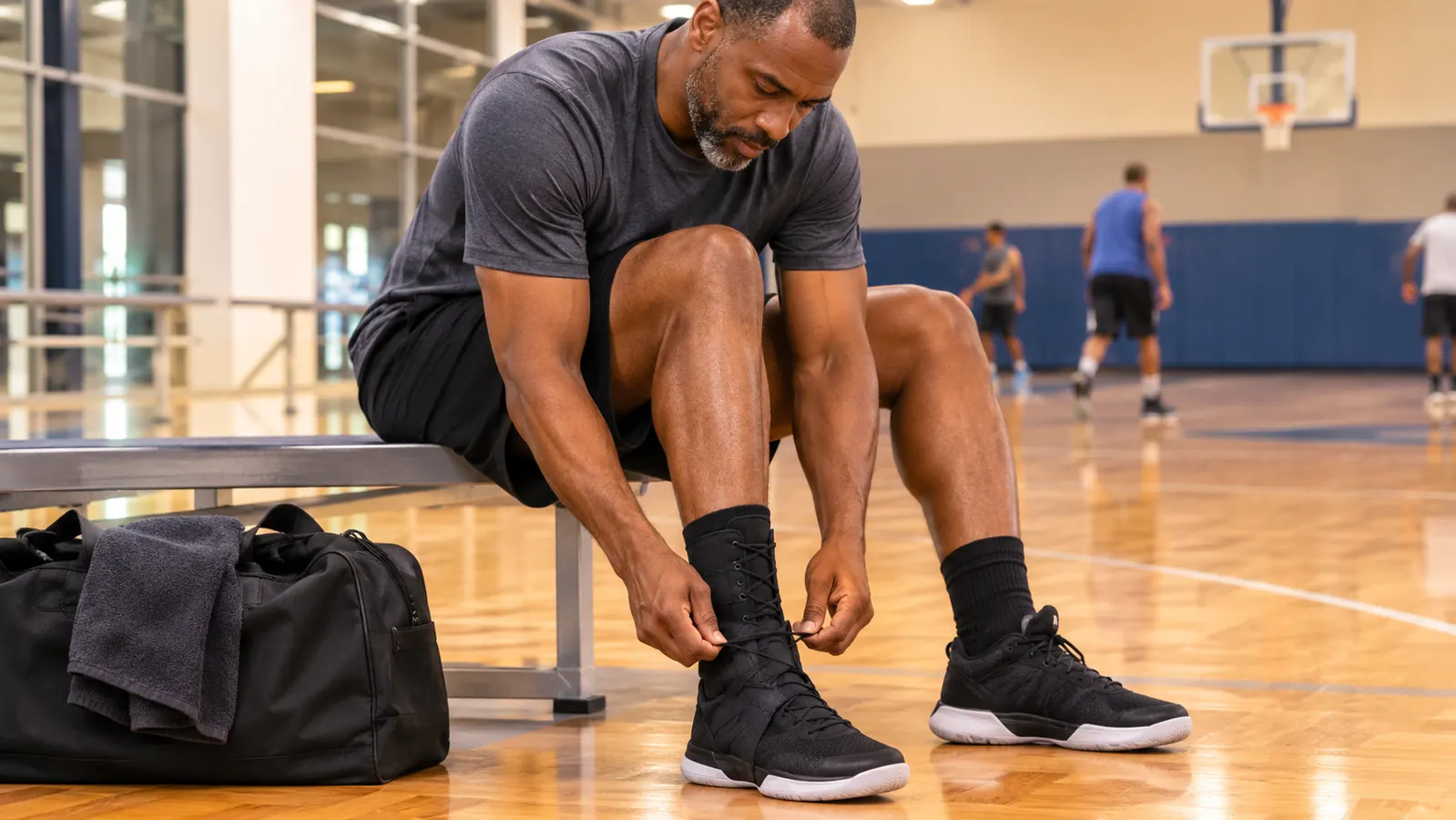
The McDavid is a lace-up brace, not a slip-on sleeve. You put your foot into it, pull the laces tight, and close the top with a hook-and-loop tab. The laces are the part that lets you set the compression. Some nights I want it snug. On a Sunday morning after a long week on my feet, I want it a little looser. The adjustable lacing is the whole reason I can do that.
The figure 8 design crosses the foot and ankle. That matters for the way I move. A lot of braces squeeze the whole ankle evenly, which feels stable until you try to cut. The McDavid pulls in specific directions. The rigid side stabilizers sit on both sides of the ankle and resist the roll. I have felt them catch when I came down on someone's foot. I have not felt them dig in during a normal stride.
The brace has an included ankle strap, and the closure is hook-and-loop. The shell is polyester. It weighs 3.2 ounces on the spec sheet, and it measures 9.2 by 7.5 by 4.2 inches. That is light enough that I do not think about it after the first few minutes. It is also enough material that I know it is there. I would not call it invisible. I would call it quiet.
The laces took me a week to learn. There are enough of them that you can get them uneven without noticing, and an uneven lace job pulls the whole brace off center. For the first few sessions the tab kept drifting toward my outer ankle, and I could not figure out why. Turns out I was starting at the top lace every time. If I pull the bottom two first and work upward, the brace sits centered and stays centered. A guy I play with on Tuesdays watched me do it once and said it looked like tying a very nervous shoe. He is not wrong.
The care instruction is hand wash only. I washed it every couple of weeks during the season, mostly to keep the inside from getting ripe. I used cold water and a little gentle soap, rinsed it, and let it air dry on the back of a chair. It did not shrink or stiffen up. I would not throw it in the washing machine, because the hook-and-loop tab will grab everything in the load and the side stabilizers do not need to be tumbled.
How It Fits Inside a Basketball Shoe
The first question I get from guys at the rec center is whether it fits in a normal shoe. For me, yes. I lace my game shoe a little looser than I would without the brace, then tighten the brace, then tighten the shoe. That order matters. If I lace the shoe first and then crank the brace, the whole thing feels pinched across the top of my foot.
Here is how I would test it before you commit. Put the brace on, then put the shoe on standing up, not sitting down. Standing tells you the truth about the collar. When I tried it standing in a low-cut shoe at the store, I could feel the top of the brace pressing right under the collar line. It did not hurt. It was just there, and I would not want to run a full game in a shoe that shallow. In the Lockdown 7 and the Own the Game 3.0, I had no issue. In the FitVille wide high-top, which already has more room, the brace almost disappears. The LeBron Witness 8 is a little snugger through the collar, but I can still get the brace in without cutting off circulation.
Sizing is the other thing. I wear a Large, and that is the size I would buy again. I did not guess by shoe size alone. I checked the McDavid sizing information and went with the Large for my foot. If you are between sizes, I would err toward the size that matches your ankle measurement, not the size that matches your sneaker. A brace that is too small is a tourniquet. A brace that is too big will slide down your heel on the first hard stop.
Eleven Months Later
I have worn the McDavid brace for about eleven months, in every game since December 2025. That is roughly three sessions a week during the season, plus the occasional outdoor run in the summer. The laces still hold. The hook-and-loop tab still sticks. The side stabilizers have not poked through the shell. I have not had to replace it.
The wear shows up where you would expect. The laces have gone a little fuzzy from the aglets dragging through the eyelets, and the inside of the shell has taken on the shape of my foot, which is a good thing. There is a faint crease across the top where the tab closes. Nothing has frayed. The side stabilizers still feel the same when I press on them with my thumb as they did the week I took the brace out of the package. I keep expecting a lace to snap. It has not.
The bigger result is the one I cannot photograph. I have not rolled my left ankle since I started wearing it. I have not sprained anything. I am 47, and I play against guys in their twenties who cut harder than I do. Some of that is luck. Some of it is the brace. I know how my ankle felt in the sleeve, and I know how it feels now when I land on the side of my foot. The brace catches. That is the whole review.
I also notice it less. The first week, I felt the side stabilizers against my ankle bone and thought I had made a mistake. By the second week, I stopped noticing. Now I put it on the way I put on socks. That is the best thing I can say about a piece of gear. It became part of the routine instead of a project.
I have not rolled my left ankle since I started wearing it. That is the number I care about.
Where It Bugged Me
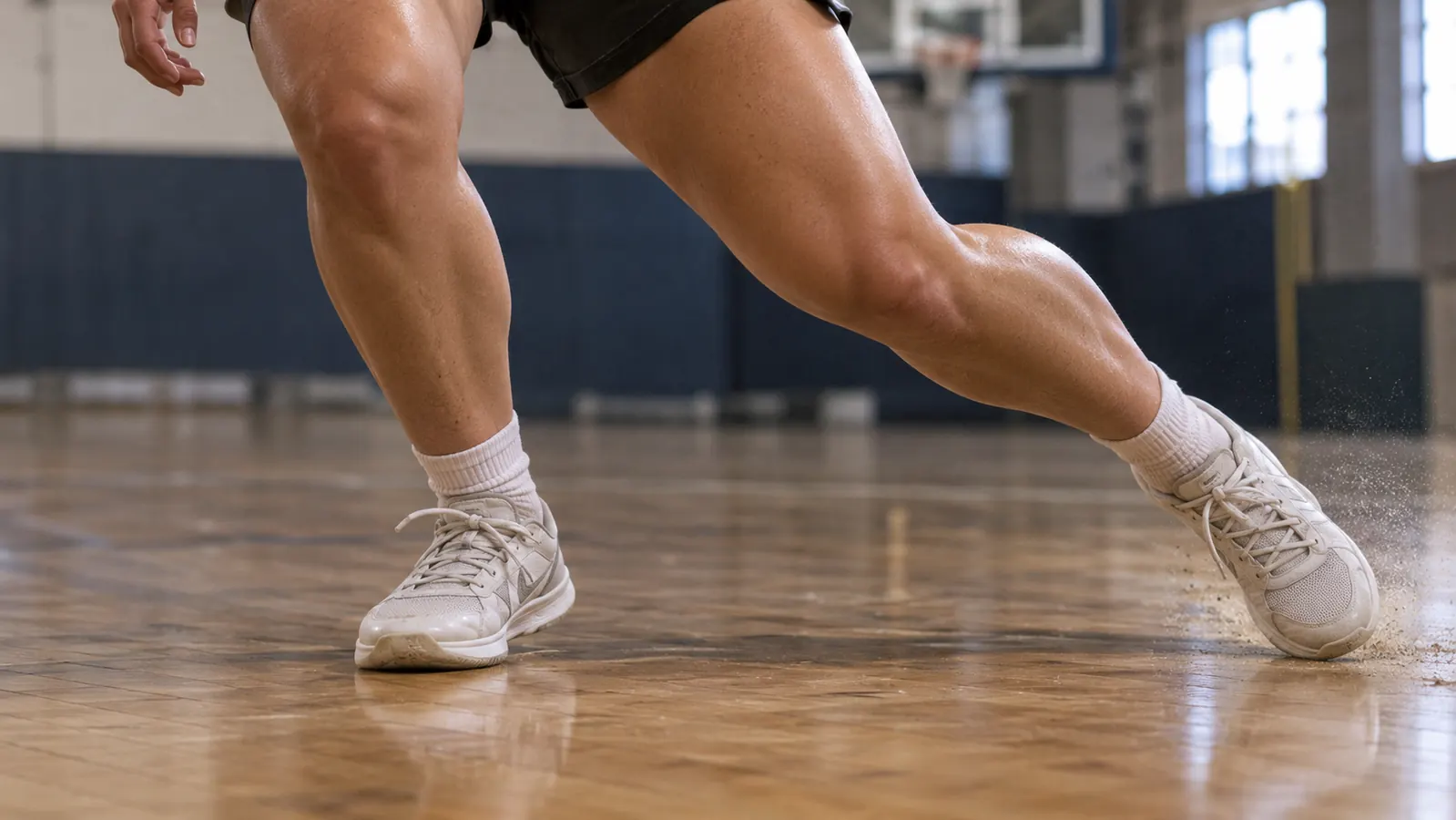
It takes time. A sleeve takes five seconds. The McDavid takes me about a minute if I am being careful. I have to get the laces even, close the tab, and check that the side stabilizers are sitting where they should. On a night when I am running late and the game has already started, that minute feels a lot longer than a minute.
It is hand wash only. I get it. The materials and the hook-and-loop do not belong in a dryer. But after a Sunday doubleheader, the last thing I want to do is stand at a sink. I do it, and it dries overnight on the chair, but it is a chore.
It is more brace than some people need. If you have never sprained an ankle and you just want a little warmth, this is overkill. It is also not a walking boot. I take it off after the game. I would not wear it around the house all day.
The rigid side stabilizers take a couple of wears to get used to. If your ankle bone is sensitive, give yourself a break-in period. I would not wear it for a full practice the first time. Wear it for a shootaround, then a half-court game, then a full run.
What I Liked
- Real side support for cutting and landing, thanks to the rigid side stabilizers
- Adjustable lacing lets me set compression differently from night to night
- Figure 8 design wraps the foot and ankle instead of just squeezing the whole joint
- 3.2 ounces is light enough that I forget it is on after the first few minutes
- Has held up through eleven months of rec-center and men's league games
Where It Falls Short
- Takes about a minute to lace up, which is slower than a pull-on sleeve
- Hand wash only, so it is one more thing to do after a doubleheader
- Adds volume inside the shoe, so very tight low-cut collars may need a try-on
- The side stabilizers need a short break-in period
Who This Is For
This is for the adult rec player who has a cranky ankle and wants real support without taping. If you have rolled an ankle before, if you are over 35 and still play hard, or if you play against people who land on your foot, this is the category of brace I would start with. It is also for the hoops parent who wants a straightforward brace for a teen player, as long as the size is right.
It is for the guy who is willing to spend an extra minute lacing up. If you want to pull something on in the car and go, this is not that. If you want to feel the brace catch when you cut, this is that.
Who Should Skip It
Skip it if you have never had an ankle issue and you just want a warm sock feel. A simple sleeve is simpler and easier. Skip it if you have a very tight shoe and no room for extra volume. Skip it if you will not hand wash it. A dirty brace that sits in a gym bag is not doing you any favors.
Also skip it if you are looking for a brace to wear all day. This is a sports brace. It is designed for the court, not for walking the dog. And if you have a current injury, see a doctor. A brace is not a diagnosis.
If your ankle has been the weak link, start here
I bought the McDavid with my own money and it has been on my left ankle for every game since. If you want the same setup, check availability on Amazon.
Amazon Check availability on Amazon →